The Hagia Sophia has stood for nearly 1,500 years, surviving earthquakes, wars, and regime changes a testament to both its remarkable design and continuous care. Over the centuries, a series of restoration projects and preservation efforts have ensured that this architectural masterpiece remains intact for future generations. Each restoration reflects not only technological progress but also the cultural values of its time.
Early Byzantine Repairs
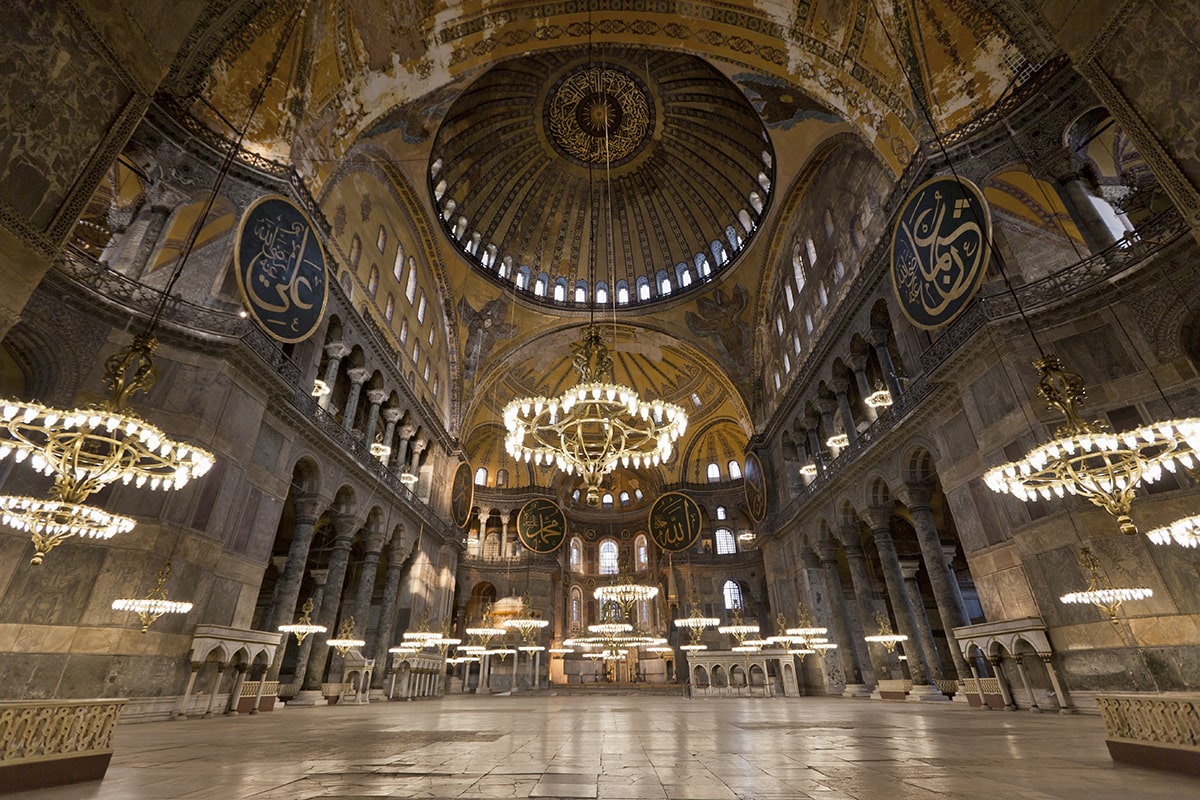
Shortly after its completion in 537 AD, Hagia Sophia faced its first major challenge: a massive earthquake in 558 AD caused the original dome to partially collapse. Emperor Justinian I immediately ordered its reconstruction under Isidore the Younger, who redesigned the dome with a higher and more stable curvature. This modification improved both its structural integrity and its visual grandeur, the version that still stands today.
Over the following centuries, Byzantine emperors periodically reinforced the walls, arches, and mosaics, particularly after seismic events in 989 and 1344. These early interventions set the foundation for the building’s remarkable resilience.
Ottoman Restoration and Structural Reinforcement
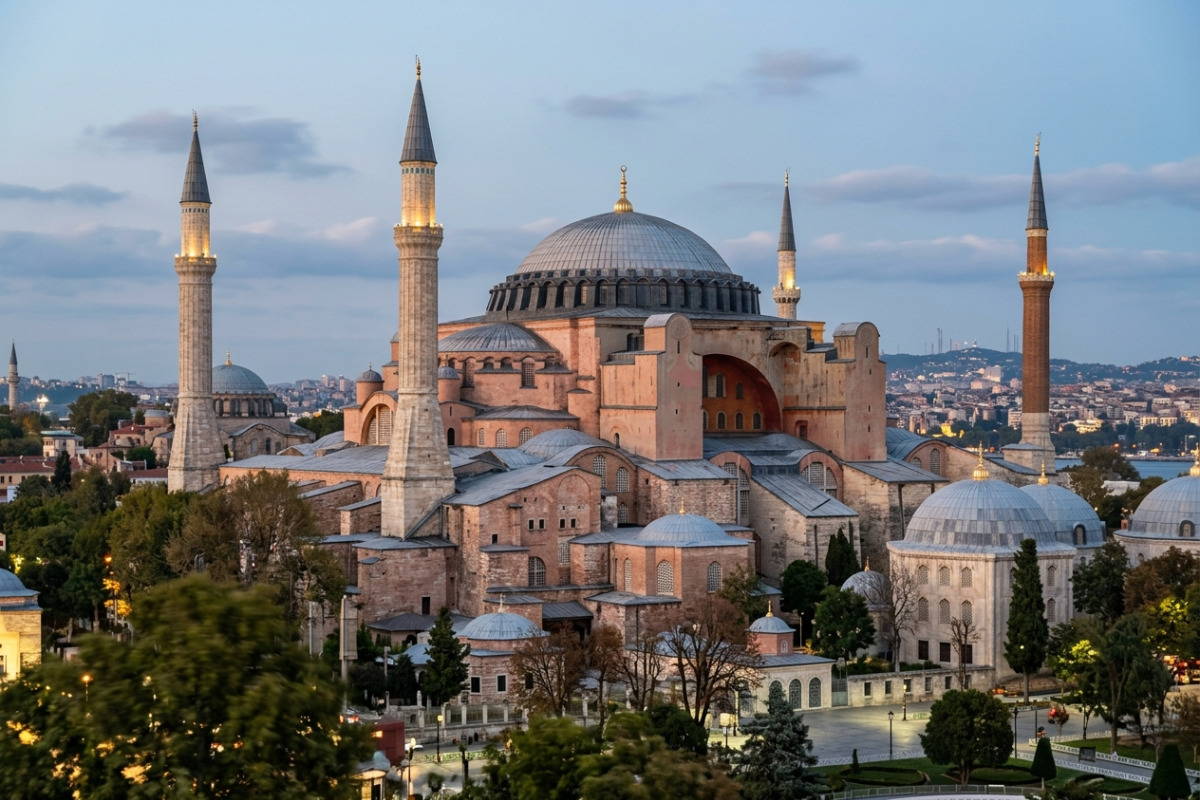
When the Ottomans converted Hagia Sophia into a mosque in 1453, they not only added minarets and Islamic calligraphy but also undertook crucial structural restorations. Sultan Mehmed II recognized the building’s historical value and commissioned immediate repairs to the dome and buttresses.
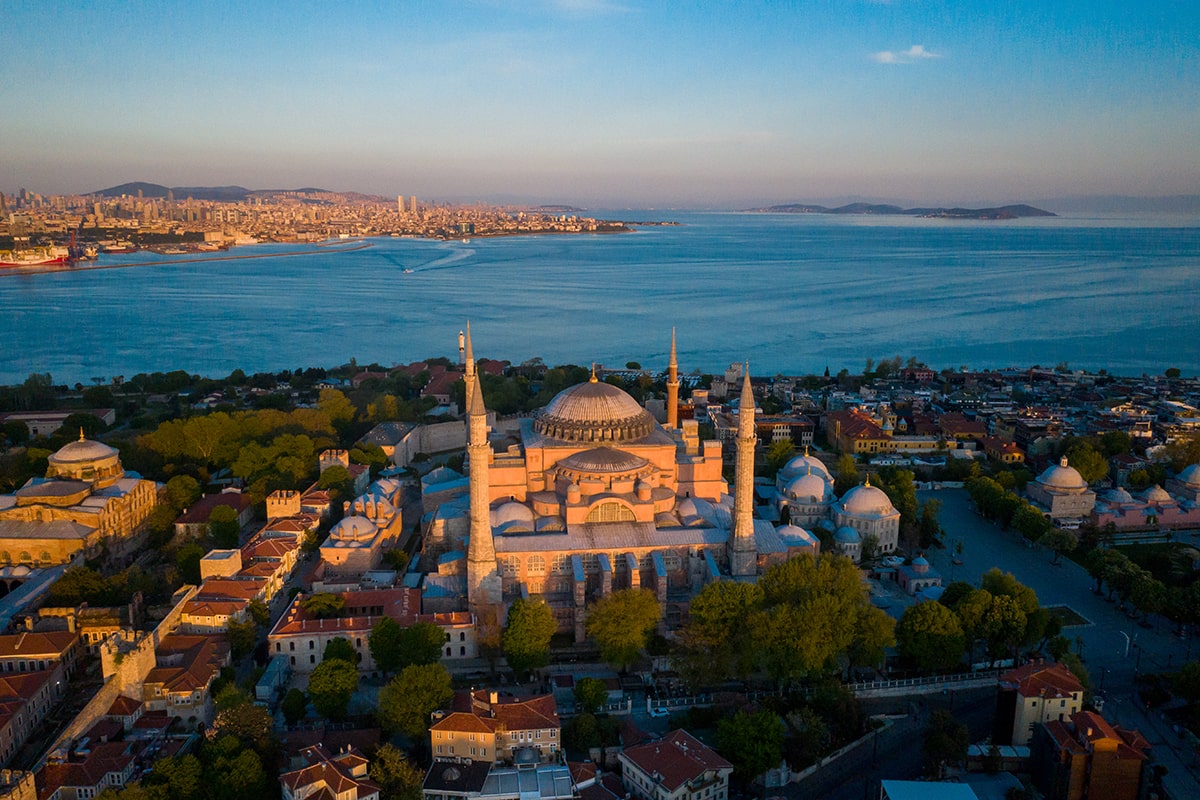
In the 16th century, the renowned architect Mimar Sinan made perhaps the most important contribution to Hagia Sophia’s longevity. He strengthened the exterior with massive supporting buttresses, added a drainage system to protect against water damage, and reinforced the dome’s base with iron ties. Sinan’s interventions were so effective that they remain essential to the structure’s stability even today.
19th-Century Renovations Under Sultan Abdulmejid I
By the 19th century, time and earthquakes had once again taken a toll. In 1847–1849, Sultan Abdulmejid I commissioned a major restoration led by Swiss-Italian architects Gaspare and Giuseppe Fossati. Their work marked the first large-scale, scientifically documented preservation project at Hagia Sophia.
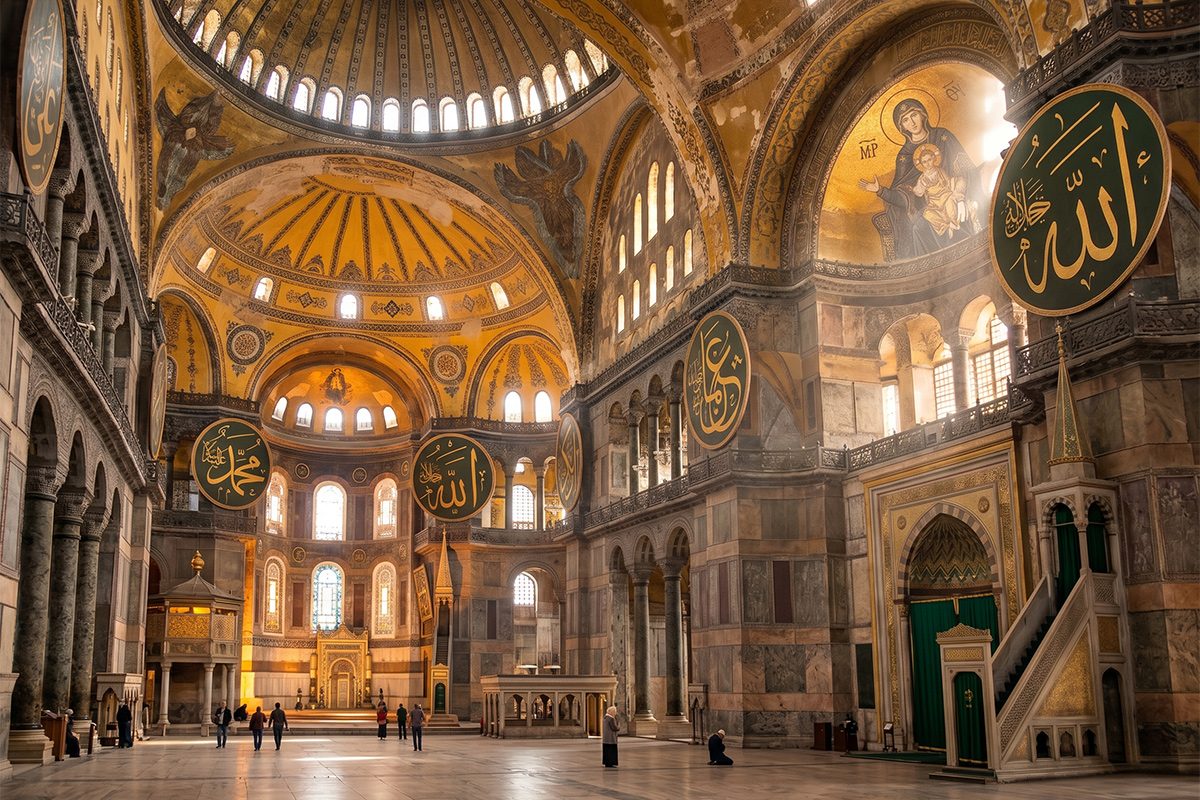
The Fossati brothers cleaned and stabilized the dome, repaired cracks with modern materials, uncovered and restored several Byzantine mosaics, and introduced the iconic calligraphic medallions by Mustafa İzzet Efendi. They also reinforced interior arches and re-gilded the dome’s decorations, giving Hagia Sophia the appearance visitors recognize today.
Museum-Era Conservation (1935–2020)
When Hagia Sophia became a museum in 1935 under the direction of Mustafa Kemal Atatürk, preservation efforts shifted from religious adaptation to archaeological restoration. A team from the Byzantine Institute of America uncovered and cleaned long-hidden mosaics that had been plastered over during the Ottoman era. This period emphasized conservation rather than reconstruction, preserving both the Christian and Islamic layers of the monument as part of its shared heritage.
Throughout the 20th century, engineers monitored structural stability, restored mosaic panels, and controlled humidity to protect fragile surfaces. International organizations like UNESCO and ICOMOS later contributed expertise and funding for conservation research.
Modern Preservation Efforts (2020–Present)
Following Hagia Sophia’s reconversion into a mosque in 2020, new preservation challenges emerged, balancing its role as a living place of worship with the responsibility of maintaining a UNESCO World Heritage Site. Ongoing projects focus on:
- Continuous monitoring of structural stability through 3D laser scanning and digital modeling.
- Restoration of damaged mosaic areas using reversible and non-invasive conservation techniques.
- Maintaining climate control inside the building to prevent moisture-related deterioration.
- Regular inspection of the dome’s lead roof and external buttresses for weather protection.
Turkish and international experts collaborate to ensure that all preservation work respects both the site’s religious function and its global historical importance.
Challenges Ahead
Despite constant care, Hagia Sophia faces natural and environmental threats from seismic activity to humidity and tourism pressure. Balancing accessibility with preservation remains a delicate task. Conservationists emphasize the need for sustainable visitor management, periodic scientific assessments, and international cooperation to safeguard the monument for centuries to come.
Final Thoughts
Hagia Sophia’s survival across empires is no miracle of luck, it’s the result of centuries of restoration, innovation, and devotion. Each generation has left its mark not just on its walls, but in its legacy of resilience. Today, ongoing preservation ensures that this symbol of world heritage continues to inspire faith, unity, and wonder for generations yet unborn.