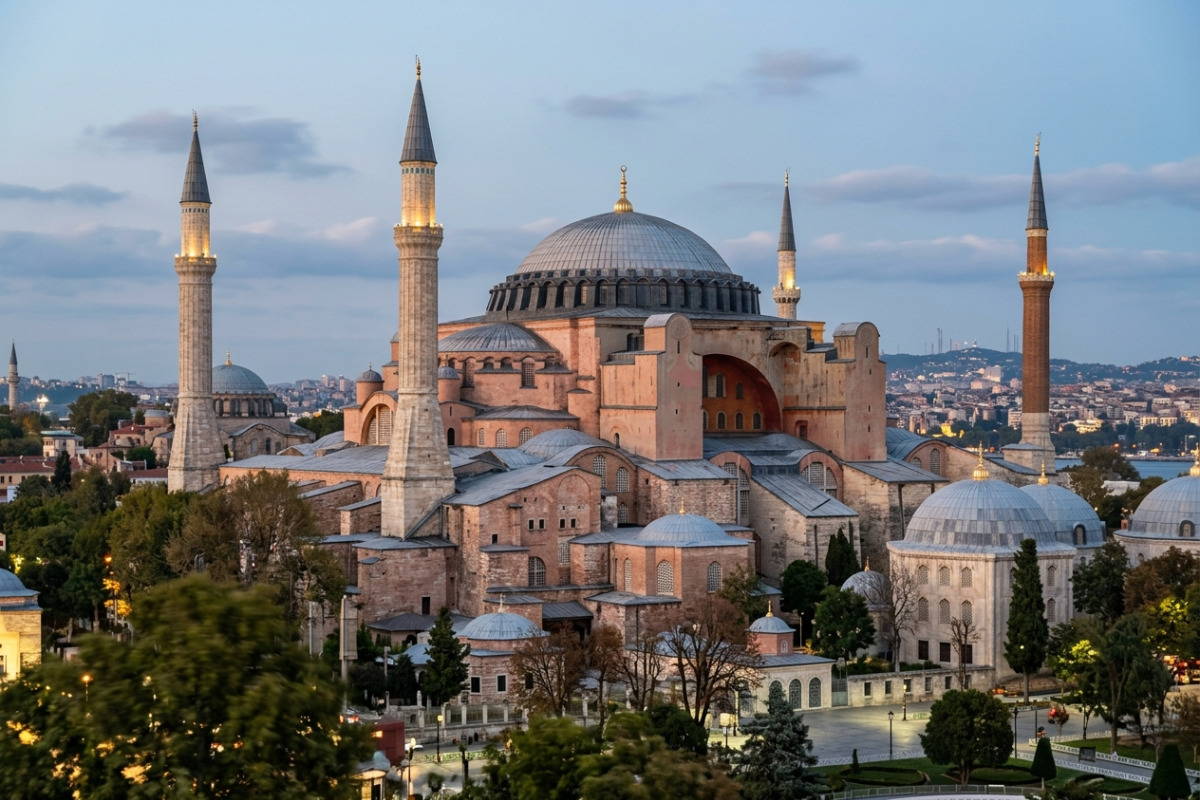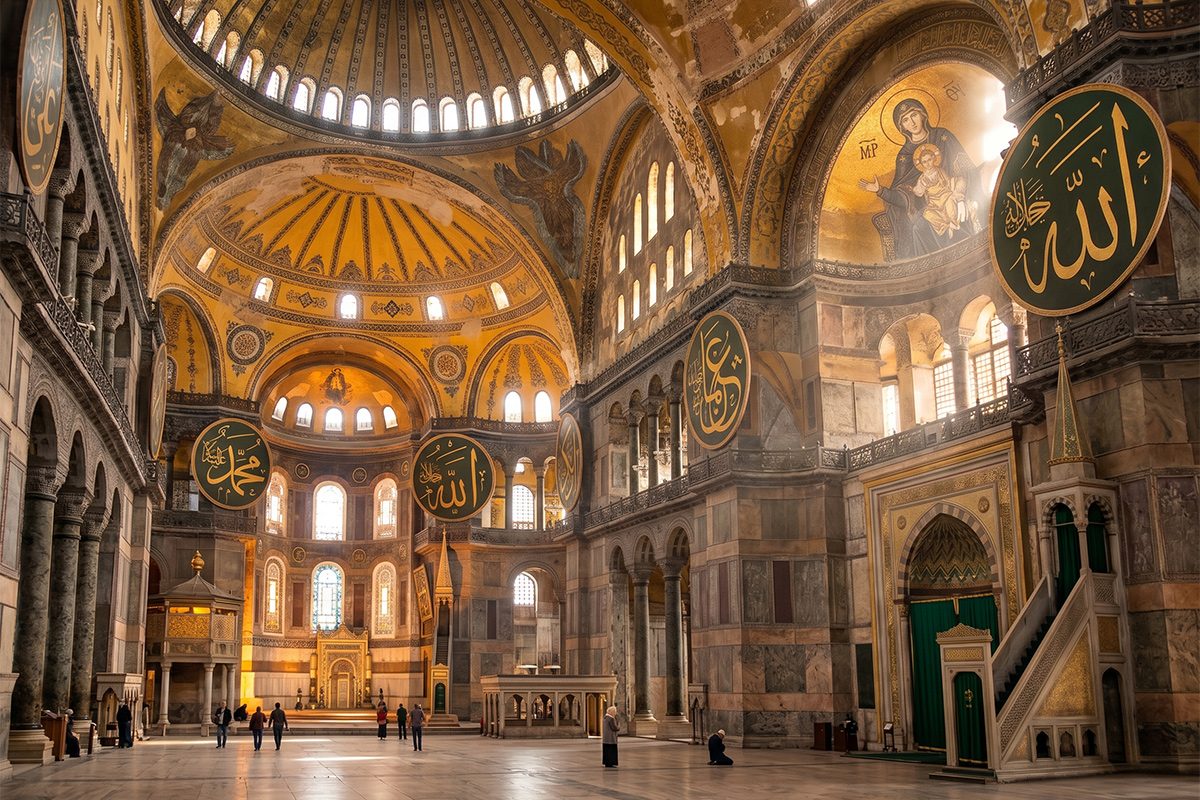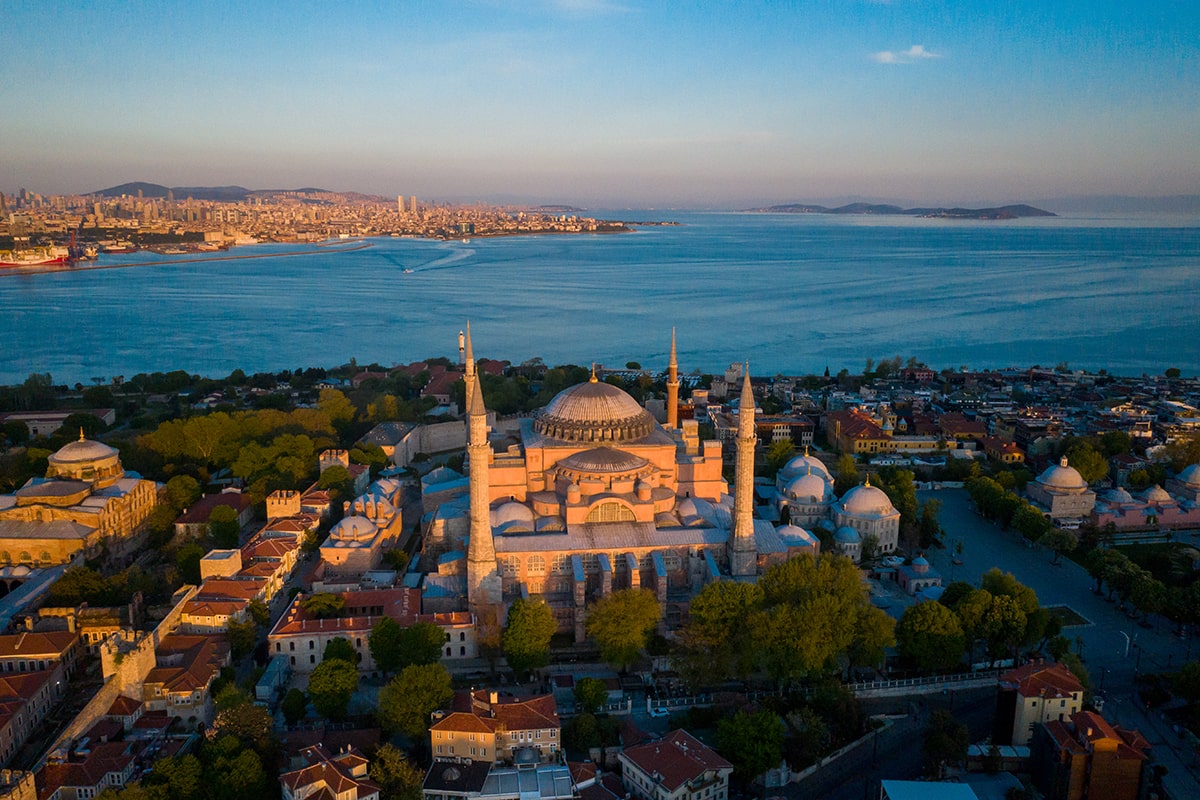
The Hagia Sophia is not just a monument, it is the architectural blueprint for centuries of Islamic design. Ever since the Ottomans transformed it into a mosque in 1453, its immense dome, harmonious proportions, and ethereal light have inspired mosque builders across the world. From Istanbul to Cairo and even as far as Kuala Lumpur, Hagia Sophia’s legacy lives on in countless domes and minarets that echo its silhouette.
The Birth of a New Architectural Language
When Sultan Mehmed II conquered Constantinople, he was so struck by Hagia Sophia’s grandeur that he ordered his architects to study its structure in detail. The building’s central dome on pendentives, a revolutionary engineering feature that allowed a circular dome to rest atop a square base became the defining characteristic of Ottoman mosque architecture. This innovation would later dominate Islamic skylines for centuries.
The Ottomans saw Hagia Sophia not merely as a symbol of conquest but as a model of spiritual and spatial perfection. They sought to emulate its balance of form and light, merging Byzantine engineering with Islamic aesthetics to create something entirely new.
The Blue Mosque: Hagia Sophia’s Spiritual Successor
The most direct architectural descendant of Hagia Sophia is the Sultan Ahmed Mosque, or Blue Mosque, completed in 1616. Designed by architect Sedefkar Mehmed Ağa, a pupil of Mimar Sinan, it mirrors Hagia Sophia’s central dome, cascading semi-domes, and vast prayer hall bathed in natural light. However, the Blue Mosque introduced a more refined sense of symmetry and added six minarets, a distinctive Ottoman flourish.
Facing Hagia Sophia across Sultanahmet Square, the two structures form an architectural dialogue one Byzantine, one Islamic, representing the continuity of sacred space in Istanbul’s skyline.
Mimar Sinan and the Perfection of the Hagia Sophia Model
The legendary Ottoman architect Mimar Sinan (1489–1588) was profoundly influenced by Hagia Sophia. Throughout his career, he sought to improve upon its proportions, light distribution, and structural integrity. His masterpieces, including the Süleymaniye Mosque in Istanbul and the Selimiye Mosque in Edirne, represent the culmination of that pursuit.
Sinan’s works refined the Hagia Sophia prototype by integrating larger windows, balanced acoustics, and stronger supporting systems. The Selimiye Mosque, in particular, is often considered Sinan’s response to Hagia Sophia, a reinterpretation rather than an imitation, achieving perfect symmetry and visual harmony.
Influence Across the Islamic World
The Hagia Sophia model spread far beyond the Ottoman heartlands. In Cairo, the Mosque of Muhammad Ali (19th century) borrowed heavily from its dome structure and cascading form. In Pakistan, the Faisal Mosque and in Malaysia, the National Mosque (Masjid Negara) both carry design DNA traceable to Hagia Sophia’s balance of scale and symbolism.
Even in modern architecture, echoes of Hagia Sophia’s geometry and sense of space appear in monumental mosques built across Asia and the Middle East. Its influence continues to define the very image of what a mosque looks like, a vast dome rising heavenward, surrounded by minarets and illuminated by divine light.
Symbolism Beyond Structure
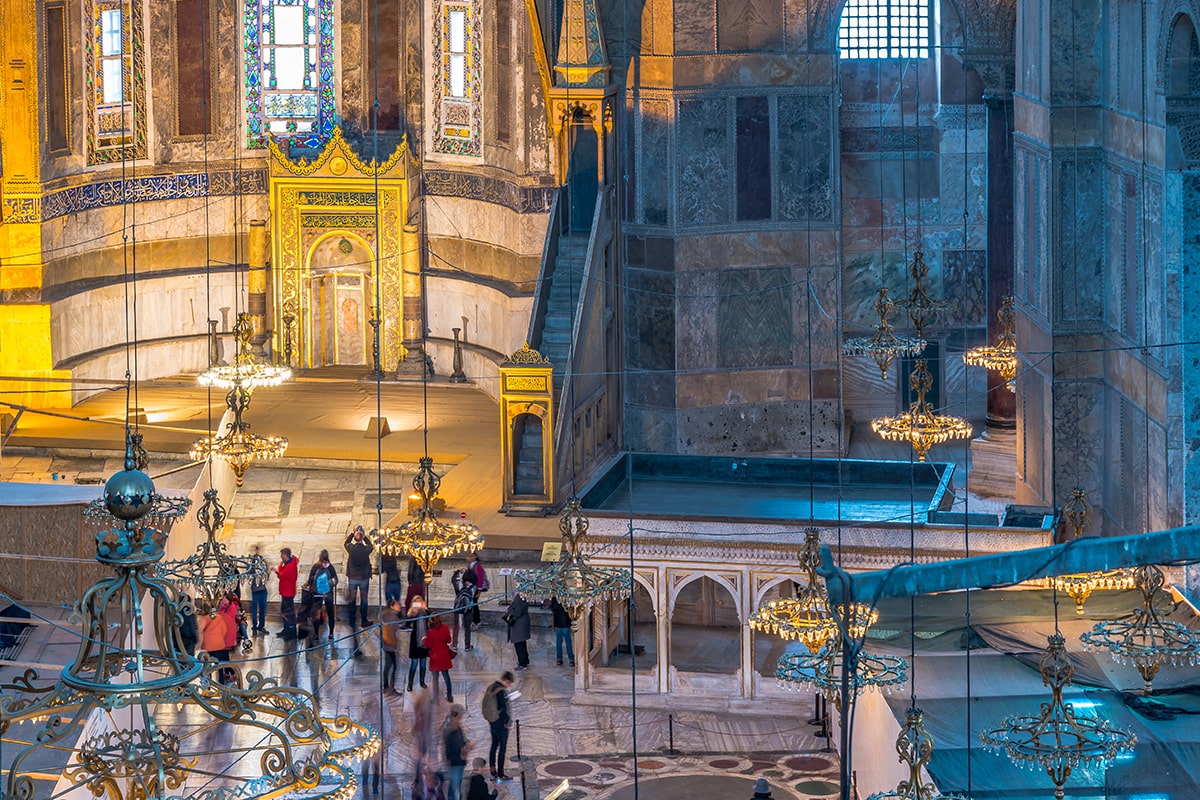
Hagia Sophia’s influence is not limited to its form; it also shaped the spiritual experience of mosque design. Its vast, open interior created a sense of cosmic order, the feeling of standing beneath the heavens. Ottoman architects carried this idea forward, designing mosques where believers felt enveloped by light and space, reinforcing the unity between divine and earthly realms.
In this way, Hagia Sophia became not just a physical model but a philosophical foundation for Islamic architecture, one that continues to inspire designers even in the 21st century.
A Legacy That Transcends Borders
Today, Hagia Sophia’s architectural legacy can be seen wherever domes dominate skylines. Its form has been reinterpreted in stone, concrete, and steel by generations of architects seeking to recreate the same sense of awe. Whether in the mosques of Istanbul, the palaces of Tehran, or the mosques of Kuala Lumpur, its DNA endures.
The building’s ability to inspire across time, faith, and geography proves its universality. Hagia Sophia’s design transcends religion, it is, at its heart, a monument to human creativity, harmony, and the timeless pursuit of the divine.
Final Thoughts
Hagia Sophia’s architectural influence extends far beyond Istanbul, it shaped the identity of Islamic architecture across continents. From its massive dome to its luminous interiors, it remains a blueprint for sacred architecture and a symbol of how beauty and faith can coexist in perfect balance. Every mosque that follows its design carries forward not just its form, but its spirit, the enduring idea that light, space, and devotion are one.