Visiting Hagia Sophia in the winter months is a completely different experience from the busy summer season. With fewer tourists, softer light, and a calm atmosphere, winter allows you to appreciate this architectural wonder in peace. Whether you’re a photographer, history enthusiast, or simply seeking a more intimate visit, this season reveals Hagia Sophia’s most poetic side.
Why Visit in Winter?
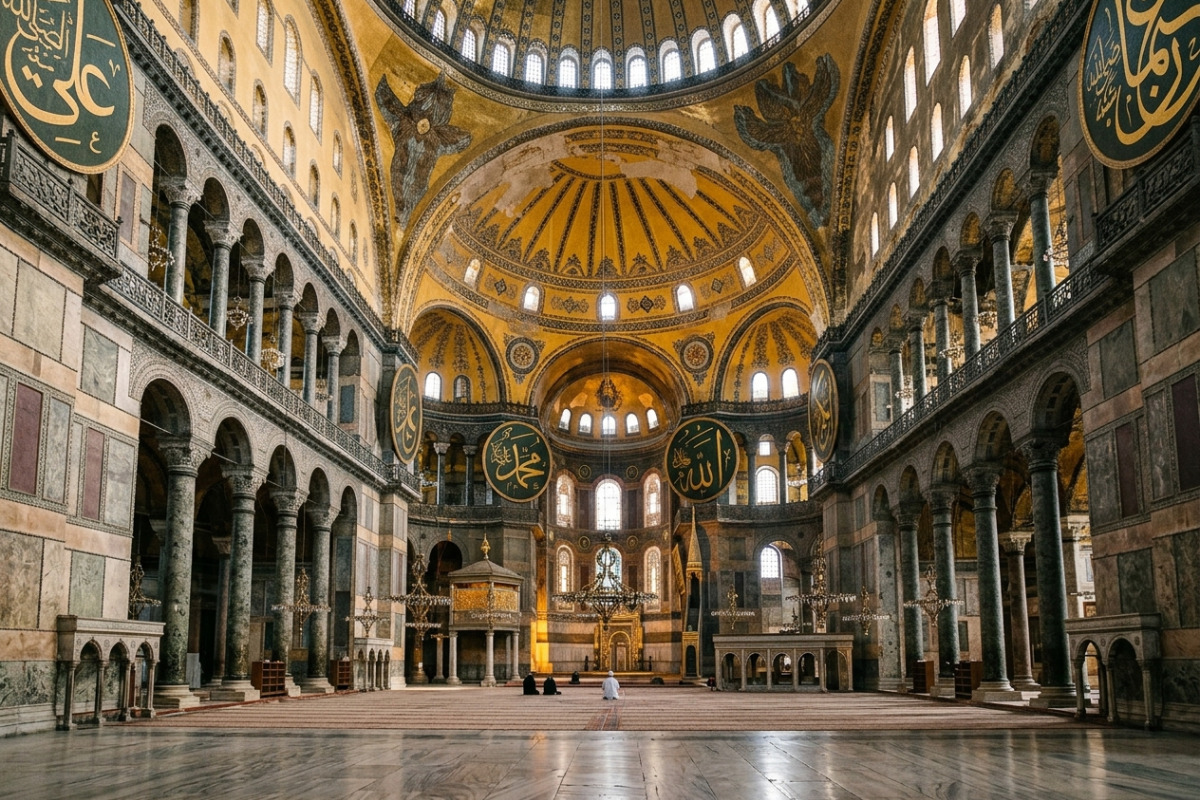
From November to February, Istanbul sees fewer visitors, which means you can enjoy Hagia Sophia without the long lines and heavy crowds that fill Sultanahmet in summer. You’ll have more time to explore every corner of the mosque, admire the mosaics up close, and take photos without feeling rushed.
Cooler temperatures averaging between 5°C and 12°C (41°F to 54°F) make walking around the Sultanahmet district comfortable, even if you plan to visit nearby landmarks like the Blue Mosque or Basilica Cistern on the same day.
The Unique Winter Atmosphere
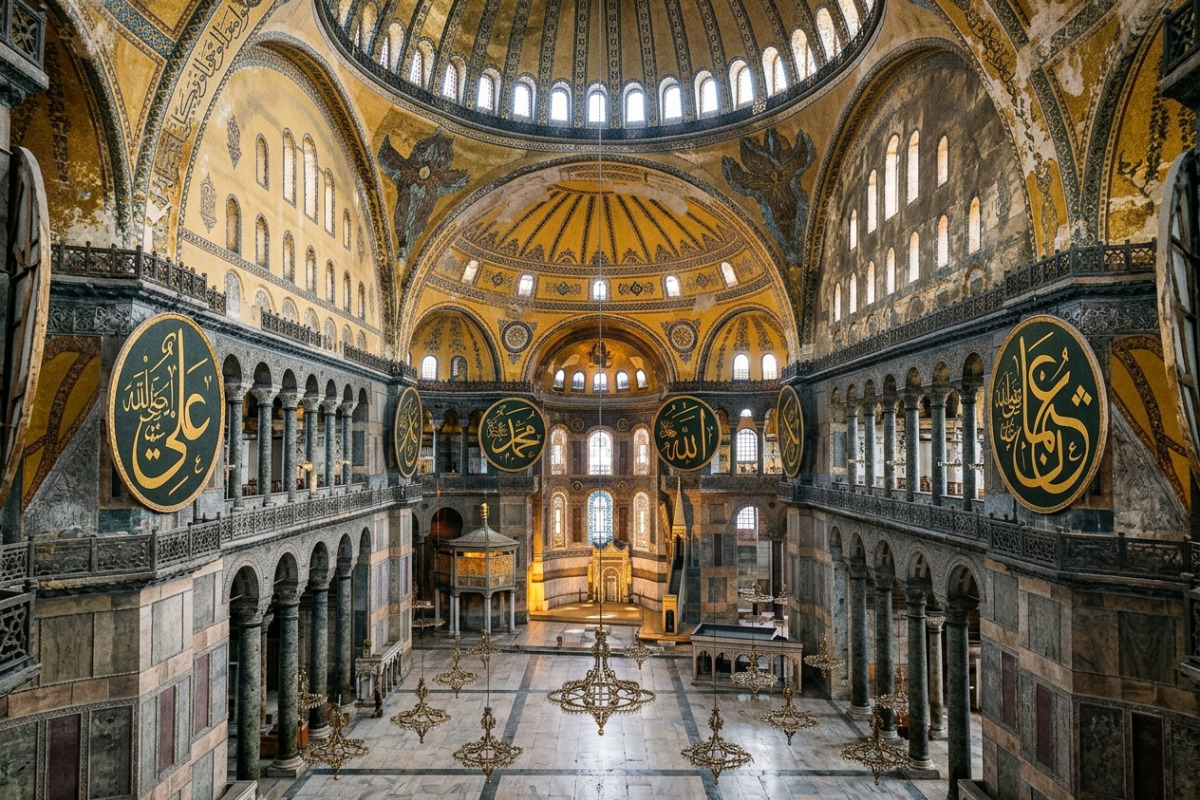
Winter gives Hagia Sophia a quieter, almost mystical aura. The sound of footsteps echoing beneath the massive dome feels more pronounced, and the filtered sunlight through the upper windows creates a golden haze inside. On foggy or rainy days, the exterior looks even more dramatic, the kind of cinematic mood photographers dream of capturing.
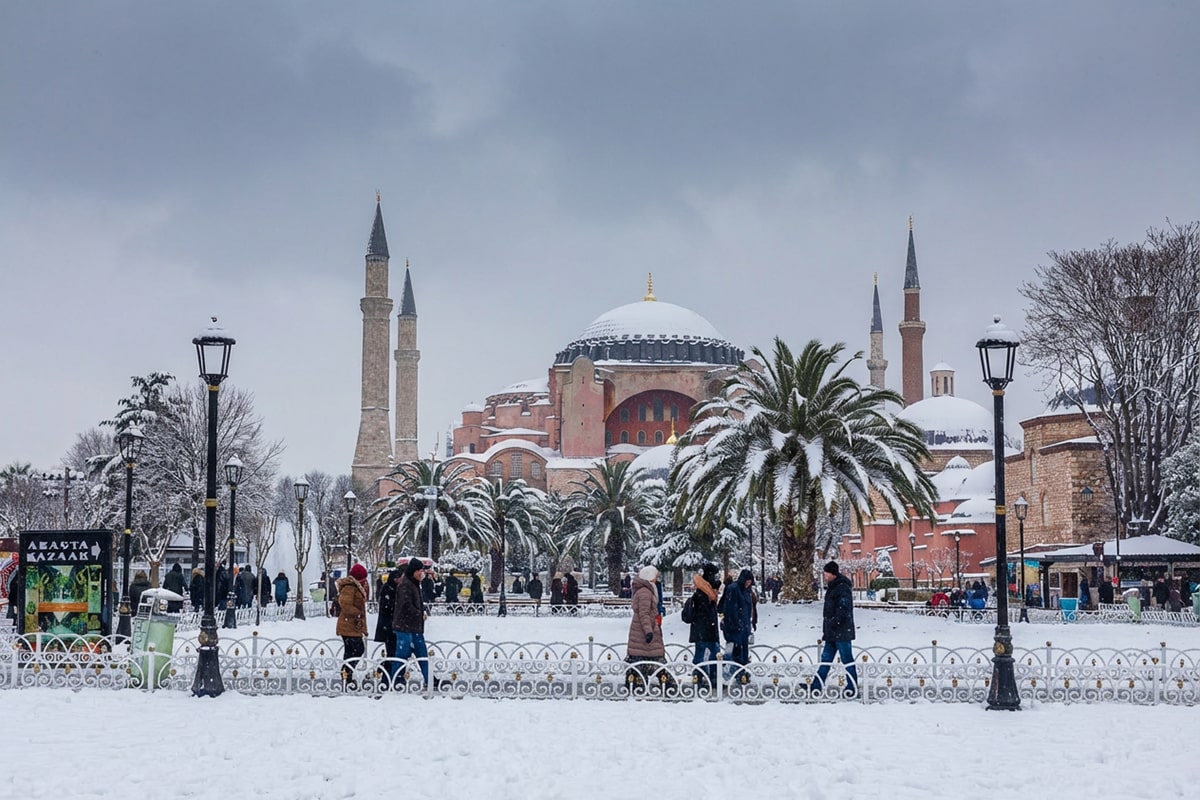
Occasionally, Istanbul gets light snowfall in January or February, and if you’re lucky enough to be there during those moments, seeing Hagia Sophia dusted with snow is truly magical. The surrounding domes, fountains, and minarets look straight out of a fairytale.
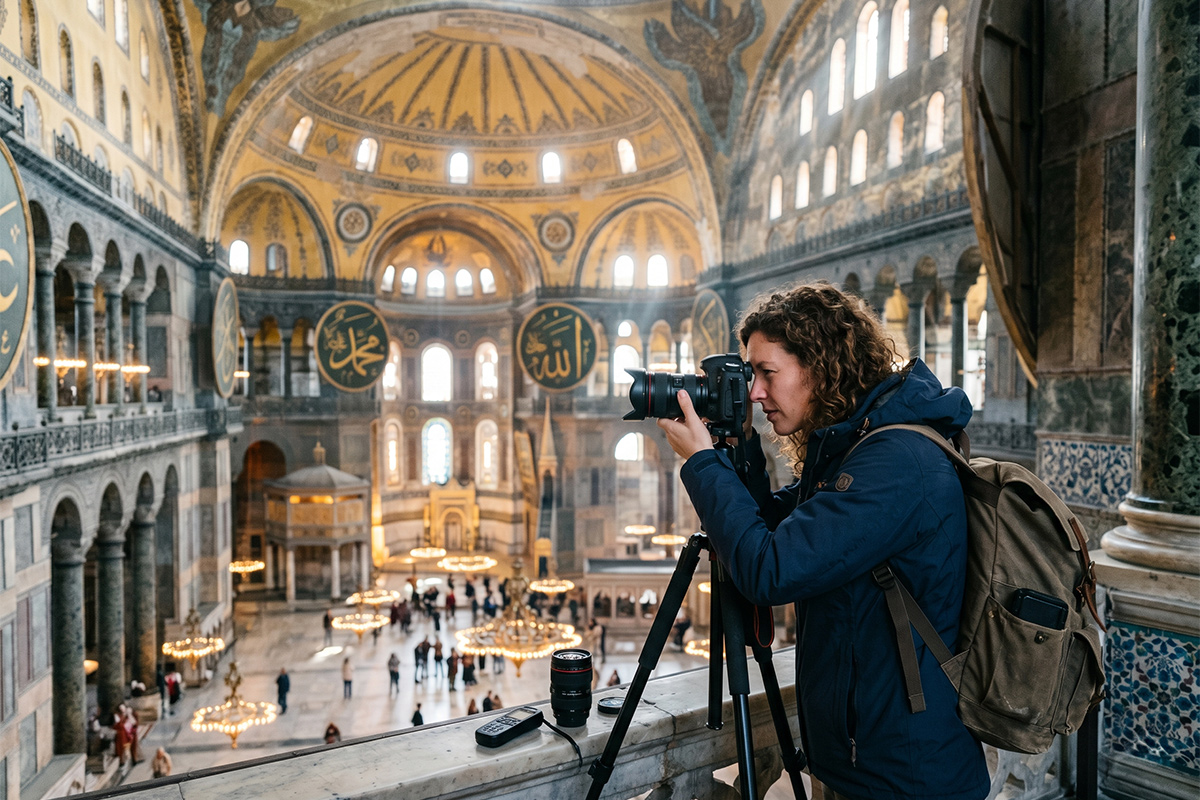
Photography Tips for Winter Visitors
- Arrive early in the morning when the soft winter light hits the domes and the square is still empty.
- Use the Fountain of Ahmed III as a foreground element for photos of Hagia Sophia’s western façade.
- For moody compositions, photograph the monument on cloudy or foggy days, the diffused light enhances textures and tones.
- Don’t forget the night shots: Hagia Sophia illuminated against a crisp winter sky looks stunning in long exposures.
Dress and Travel Tips
Istanbul winters are mild but can be unpredictable. Bring a warm, waterproof jacket, comfortable shoes, and a scarf or hat for outdoor exploration. Inside Hagia Sophia, the temperature remains cool but sheltered, so layering is key. Umbrellas are also handy as winter showers are short but frequent.
The reduced number of tourists also makes it easier to find great deals on nearby hotels and cafés, some of which offer beautiful views of the mosque. You’ll also find quieter experiences in local restaurants and museums throughout Sultanahmet.
What Else to Do in Sultanahmet During Winter
Combine your Hagia Sophia visit with nearby indoor attractions like Topkapi Palace’s rich exhibitions or the Archaeological Museum, both just a few minutes away. After your visit, warm up with a cup of Turkish tea or salep (a traditional hot milk drink) at one of the cafés near Gülhane Park or Soğukçeşme Street.
Advantages of a Winter Visit
- Shorter waiting times and easier access to interior areas.
- Lower accommodation prices and seasonal discounts.
- Less crowded nearby attractions, allowing for a smoother itinerary.
- Unique seasonal photo opportunities with fog, reflections, and possibly snow.
Final Thoughts
Winter turns Hagia Sophia into an even more inspiring place, quiet, mysterious, and beautifully atmospheric. Without the rush of crowds, you can take your time to absorb the building’s spiritual presence and artistic details. Whether it’s the sound of the call to prayer echoing through crisp air or the sight of snowflakes falling over its domes, a winter visit offers an experience few travelers ever forget.