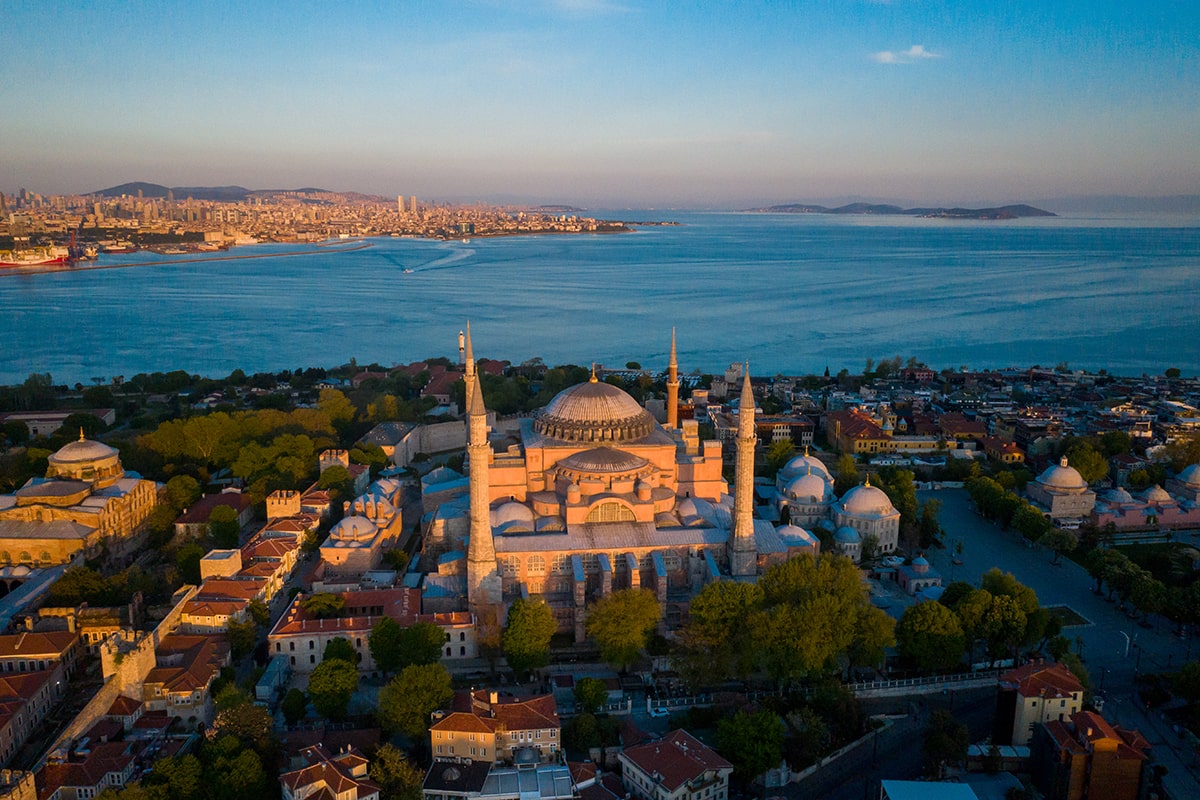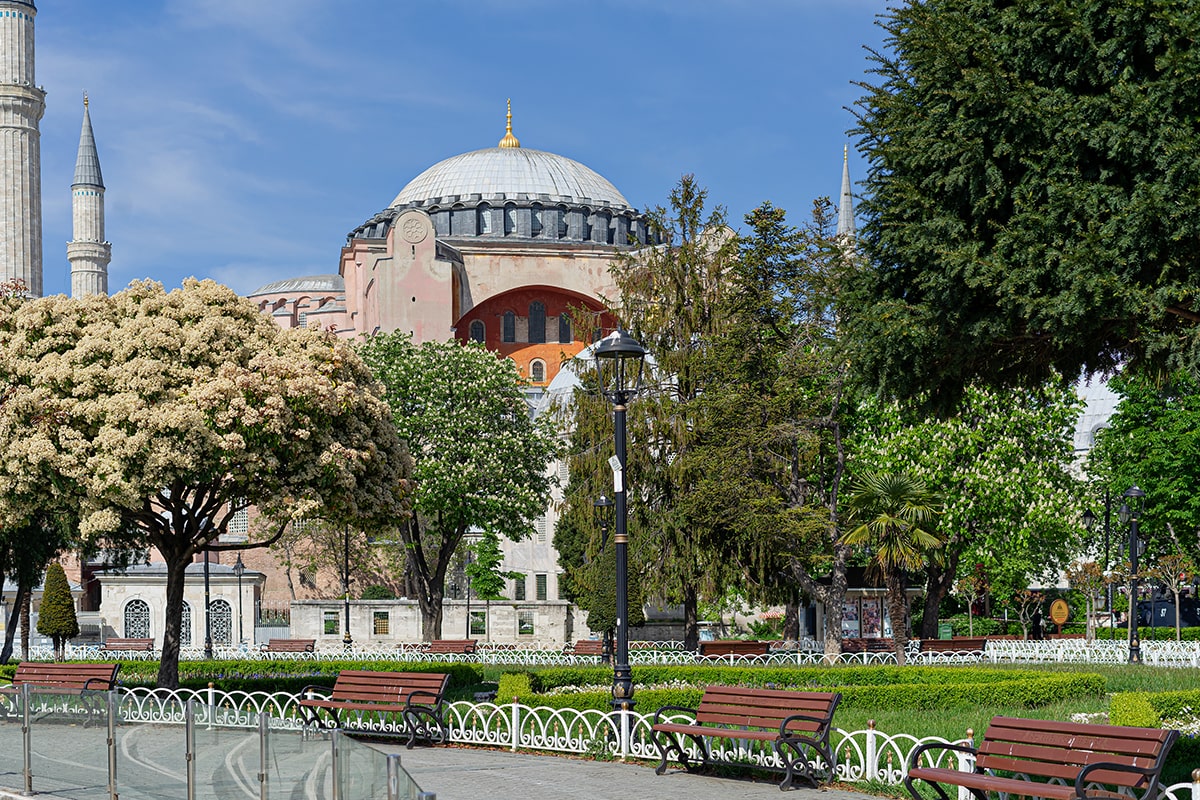
Few buildings in the world have influenced a city’s spiritual identity as deeply as the Hagia Sophia. Standing at the heart of Istanbul for nearly 1,500 years, it has served as a cathedral, mosque, museum, and again a mosque mirroring the religious evolution of the city itself. More than a monument, Hagia Sophia has been a living symbol of faith, unity, and transformation through the ages.
The Byzantine Era: The Beating Heart of Eastern Christianity
When Emperor Justinian I inaugurated Hagia Sophia in 537 AD, it became the Patriarchal Cathedral of Constantinople the most important church in Eastern Christianity. It served as the seat of the Ecumenical Patriarch and the central stage for imperial coronations, religious festivals, and theological councils that shaped Christian doctrine.
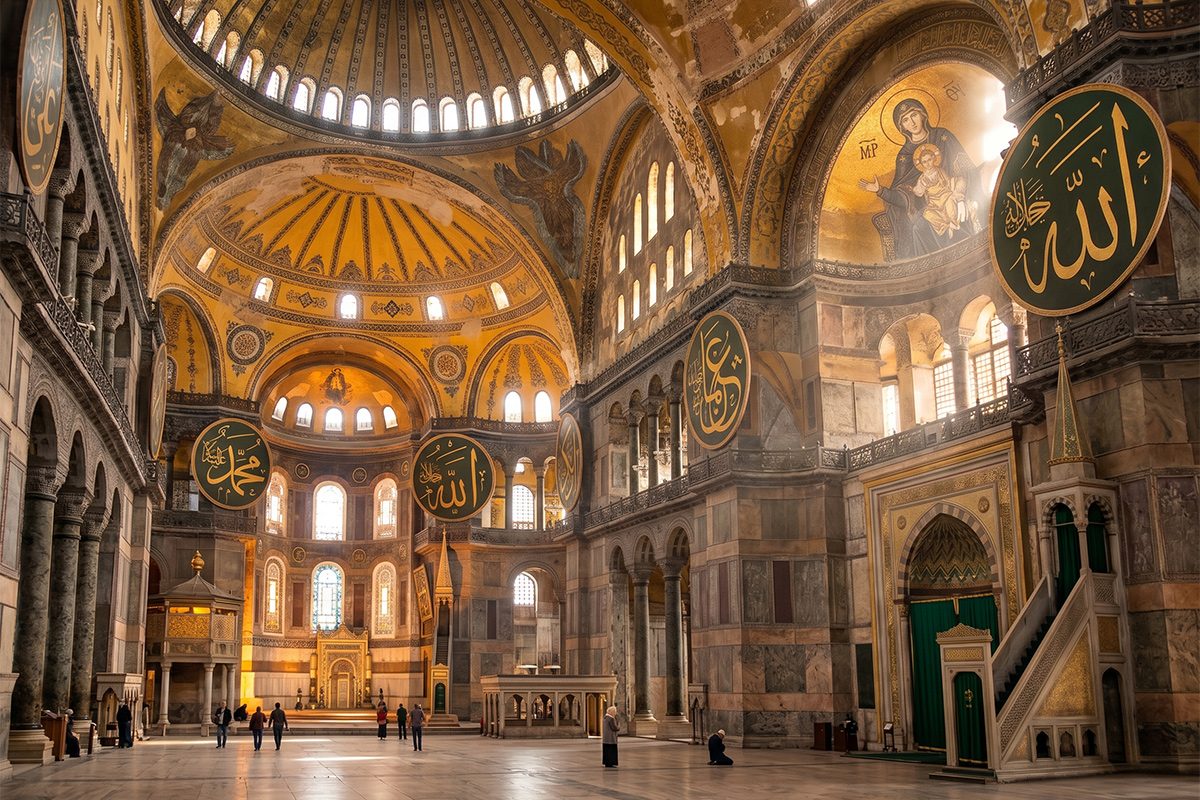
Inside, the shimmering mosaics, vast dome, and sacred relics reflected the Byzantine belief in divine order. Hagia Sophia stood as a tangible link between heaven and earth, the architectural embodiment of the Kingdom of God. For nearly 900 years, it remained the spiritual and political epicenter of Orthodox Christianity, rivaled only by St. Peter’s Basilica in Rome.
The Latin Interlude (1204–1261)
During the Fourth Crusade, Constantinople was captured by Western forces, and Hagia Sophia was briefly converted into a Roman Catholic cathedral. Latin clergy replaced Orthodox rituals, and many treasures were looted or taken to Venice, including mosaics and sacred relics. This period of foreign control marked one of the most painful chapters in the city’s religious history.
Yet even during this occupation, the structure remained a house of worship, a symbol of faith enduring through turmoil. When the Byzantines reclaimed the city in 1261, Hagia Sophia was restored and reconsecrated, resuming its role as the crown jewel of Eastern Orthodoxy.
The Ottoman Transformation: From Cathedral to Mosque
In 1453, following the conquest of Constantinople by Sultan Mehmed II, Hagia Sophia was transformed into an imperial mosque. Rather than dismantling it, the Ottomans revered its sacred aura and sought to preserve it as a symbol of continuity, a testament to both divine providence and imperial might.
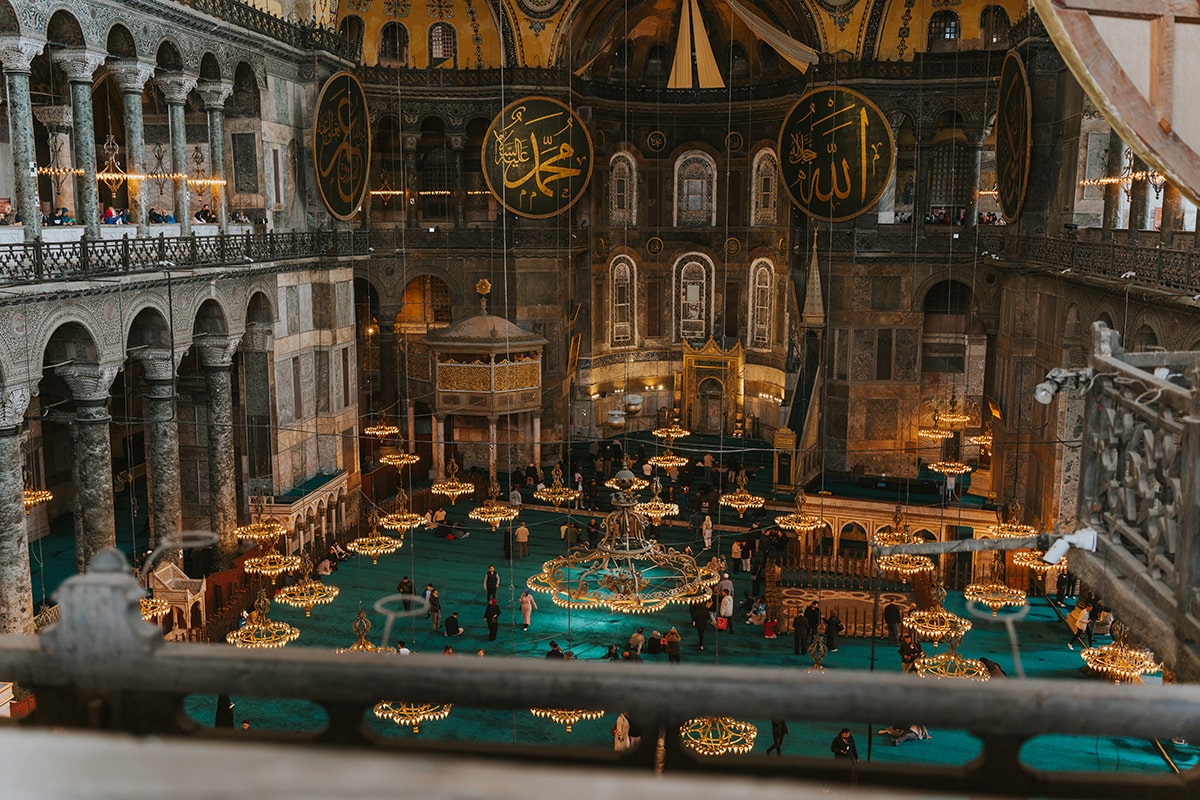
The Ottomans introduced minarets, a mihrab, and calligraphic medallions, blending Islamic faith with Byzantine architecture. For nearly 500 years, Hagia Sophia served as one of the most important mosques in the empire, where Friday prayers, coronations, and religious festivals drew crowds from across the Islamic world. Its muezzin’s call echoed across the Bosphorus, announcing Istanbul’s new spiritual order.
The Museum Era: A Symbol of Shared Heritage
In 1935, under the secular reforms of Mustafa Kemal Atatürk, Hagia Sophia became a museum. This transformation reflected Turkey’s new vision of modernity and cultural inclusiveness. Christian mosaics long hidden under plaster were revealed, standing side by side with Islamic calligraphy, a visual harmony between two faith traditions.
As a museum, Hagia Sophia welcomed millions of visitors from around the world, becoming a bridge between civilizations and a global symbol of peace and coexistence. It was no longer just a place of worship but a shared space of learning and reflection.
Return to a Mosque: The Modern Era (2020–Present)
In 2020, Hagia Sophia was reconverted into a mosque following a court ruling, once again hosting daily prayers while remaining open to visitors of all faiths. Today, it functions as both a house of worship and a cultural landmark, a living monument to Istanbul’s layered spiritual identity.
The decision sparked international debate, but for many, it reaffirmed Hagia Sophia’s enduring role as a space of devotion and continuity. Its ability to serve multiple faiths across centuries underscores its universal significance as a sanctuary where art, history, and belief coexist.
A Timeless Spiritual Beacon
From Byzantine chants to Ottoman prayers and modern recitations, Hagia Sophia has continuously echoed with the sounds of worship. Each era added a new chapter to its story, yet the essence remained the same, a place where humanity seeks connection with the divine.
Today, standing beneath its colossal dome, visitors can still feel the weight of that legacy. Hagia Sophia remains not just the heart of Istanbul’s religious life, but a symbol of faith transcending time, empire, and creed.