When the Ottoman Empire conquered Constantinople in 1453, the Hagia Sophia entered a new era, one that would preserve and enhance its majesty for centuries to come. Rather than destroying the Byzantine masterpiece, Sultan Mehmed II chose to transform it into the empire’s most prestigious mosque. Over time, Ottoman architects, artists, and calligraphers introduced brilliant innovations that blended Islamic aesthetics with Byzantine structure, turning Hagia Sophia into a symbol of Istanbul’s new identity as the heart of the Islamic world.
The Addition of Minarets
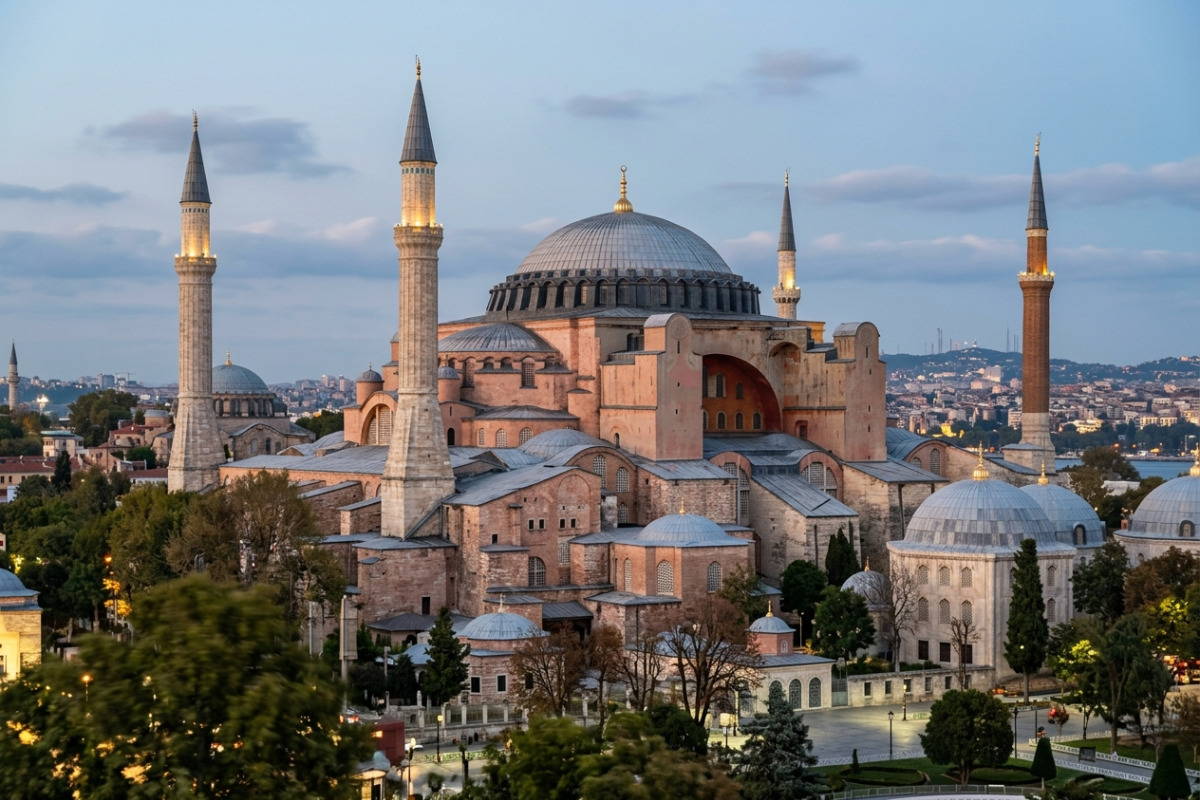
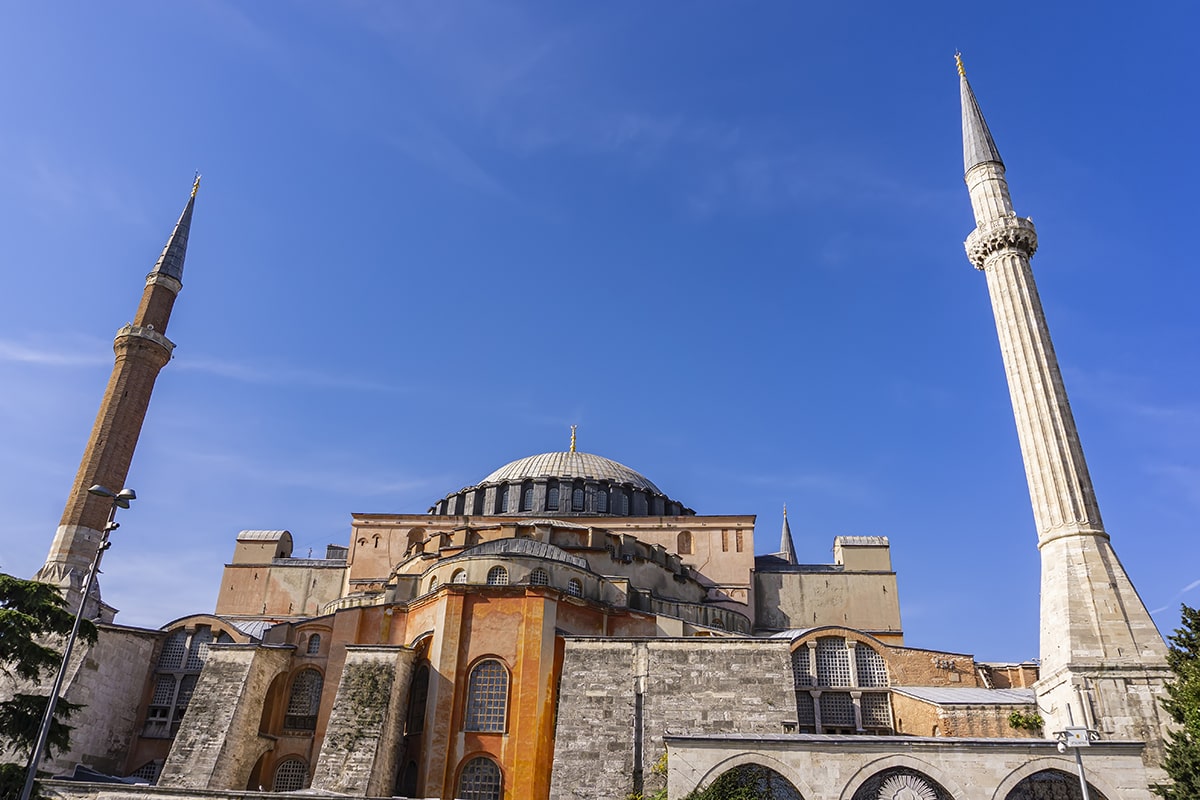
One of the most visible Ottoman contributions to Hagia Sophia is its four minarets. The first wooden minaret was built by Sultan Mehmed II shortly after the conquest, allowing the call to prayer to be heard across the city. Later sultans replaced and expanded these with elegant stone minarets that framed the building’s silhouette.
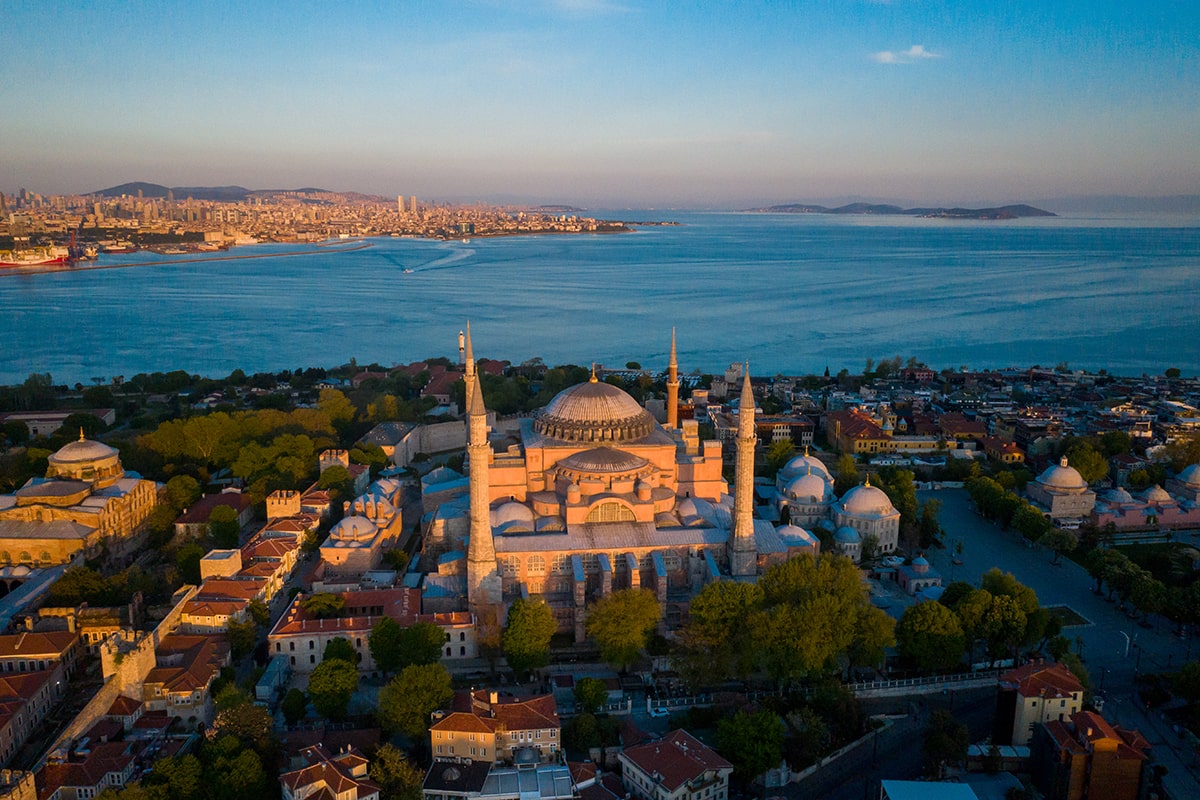
The final configuration, four tall minarets at each corner, was completed under Sultan Selim II and designed by the legendary architect Mimar Sinan. The varying heights and styles of these minarets reflect their different construction periods but together create a balanced and majestic composition that defines Hagia Sophia’s skyline today.
The Islamic Calligraphy and Medallions
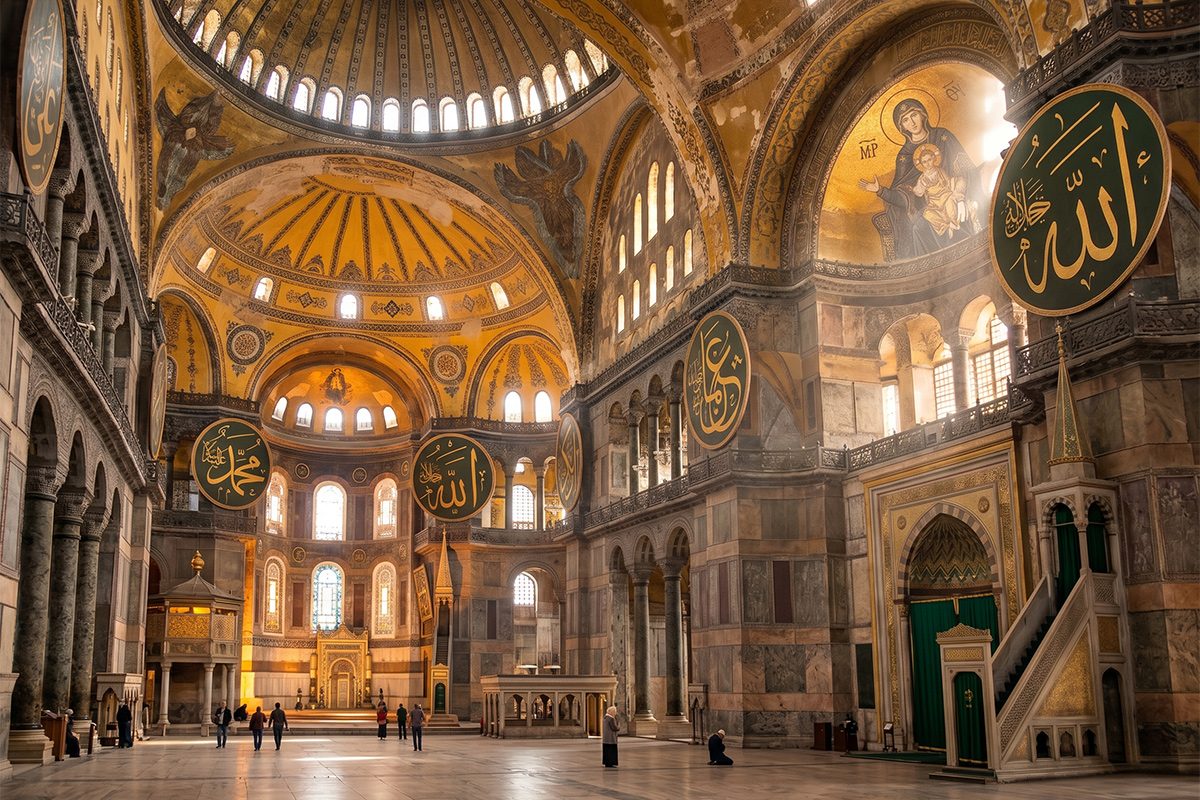
Inside Hagia Sophia, the Ottomans added enormous circular calligraphic medallions that hang beneath the dome, each more than seven meters wide. Created by the 19th-century calligrapher Mustafa İzzet Efendi, they bear the names of Allah, the Prophet Muhammad, and the first four caliphs. These masterpieces of Islamic calligraphy blend harmoniously with the Byzantine mosaics, symbolizing the unity of divine expression across faiths.
The calligraphic additions did not replace the Christian imagery but rather coexisted with it. This balance of sacred text alongside sacred image is one of Hagia Sophia’s most unique artistic dialogues.
The Mihrab, Minbar, and Muezzin’s Platform
To adapt the structure for Islamic worship, a beautifully carved mihrab (prayer niche) was installed in the direction of Mecca, slightly off-center from the original Byzantine axis. Alongside it stands the minbar (pulpit), from which sermons were delivered, and the müezzin mahfil, a raised platform for the call to prayer.
These additions, made from marble and decorated with gilded ornamentation, were designed to complement the original Byzantine architecture without overpowering it. They embody the Ottoman mastery of harmonizing spiritual function with aesthetic grace.
The Chandeliers and Illumination
Ottoman artisans also introduced grand bronze chandeliers that hang close to the floor, illuminating the vast interior with hundreds of oil lamps. The soft golden glow enhanced the reflective surfaces of both the Byzantine mosaics and the Ottoman calligraphy, creating a mystical interplay of light and shadow that continues to enchant visitors today.
The Ottomans saw light as a divine element, a visual representation of God’s presence. Their mastery of interior lighting turned Hagia Sophia into an experience of both earthly and spiritual illumination.
Structural Reinforcements by Mimar Sinan
By the 16th century, centuries of earthquakes had weakened Hagia Sophia’s massive dome and supporting arches. The Ottoman master architect Mimar Sinan, best known for the Süleymaniye Mosque, undertook critical restoration work to preserve it. He added buttresses, iron reinforcements, and external walls that stabilized the structure while respecting its original form.
Without Sinan’s engineering genius, Hagia Sophia might not have survived to the modern era. His interventions ensured the building’s longevity and set new standards for earthquake-resistant design.
The Sultan’s Lodge and Tombs
In the 18th century, a richly decorated Sultan’s Lodge (Hünkâr Mahfili) was added, giving the sultan a private area for prayer. Later Ottoman rulers, including Sultans Selim II, Murad III, and Mehmed III, were buried in ornate mausoleums on the Hagia Sophia grounds, creating a sacred complex that symbolized continuity between empire and faith.
A Living Legacy
The Ottoman additions did more than adapt Hagia Sophia for worship; they preserved and elevated it. Instead of erasing Byzantine history, the Ottomans wove their own cultural and artistic heritage into its fabric. The result is a breathtaking fusion of Christian mosaics under an Islamic dome, Arabic calligraphy beside Greek marble a visual conversation between civilizations that continues to inspire awe.
Visiting Hagia Sophia today means witnessing a thousand years of transformation layered into one structure. Every minaret, medallion, and marble carving tells a story of devotion, empire, and artistic harmony, the true essence of Istanbul’s timeless soul.