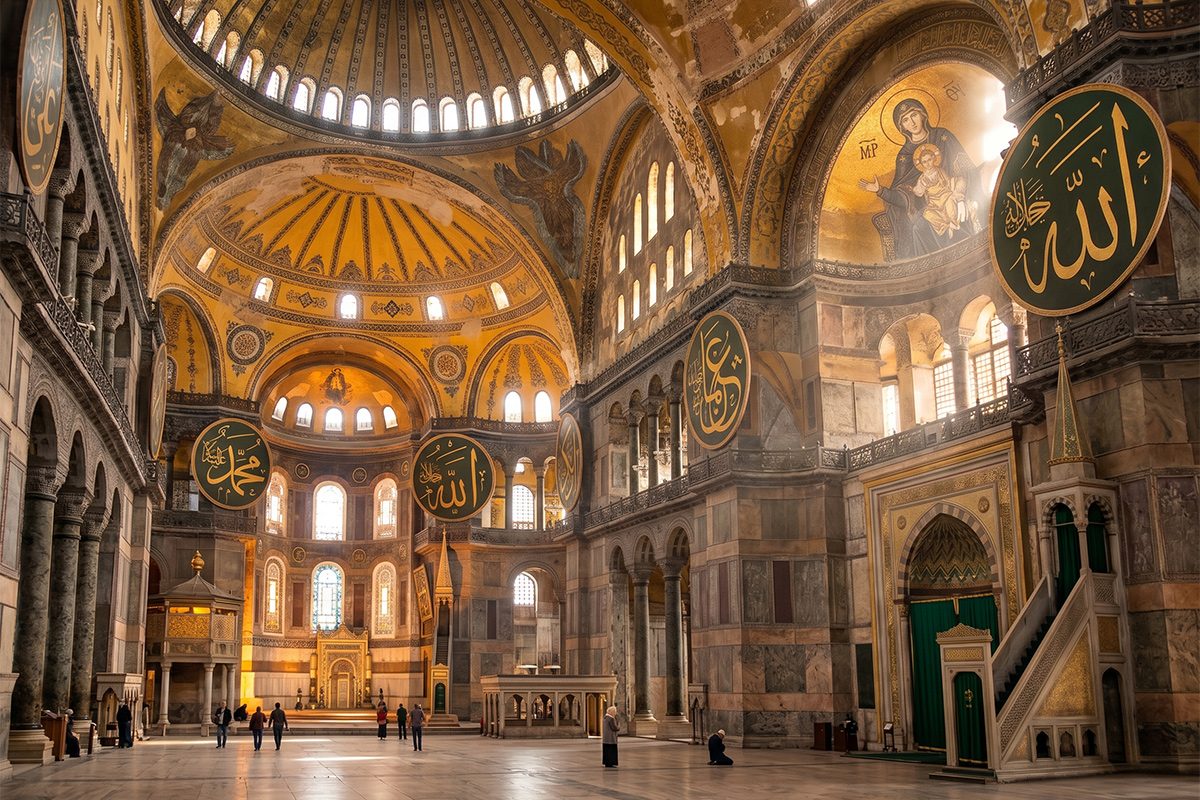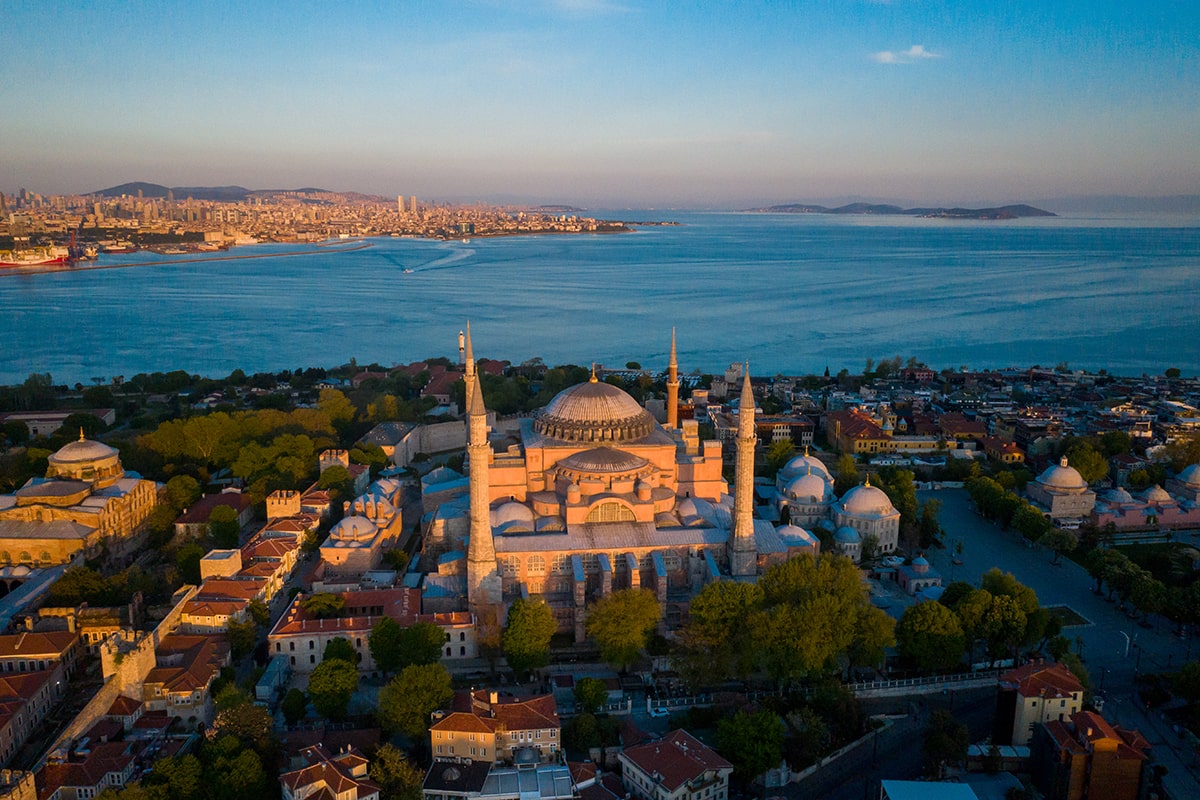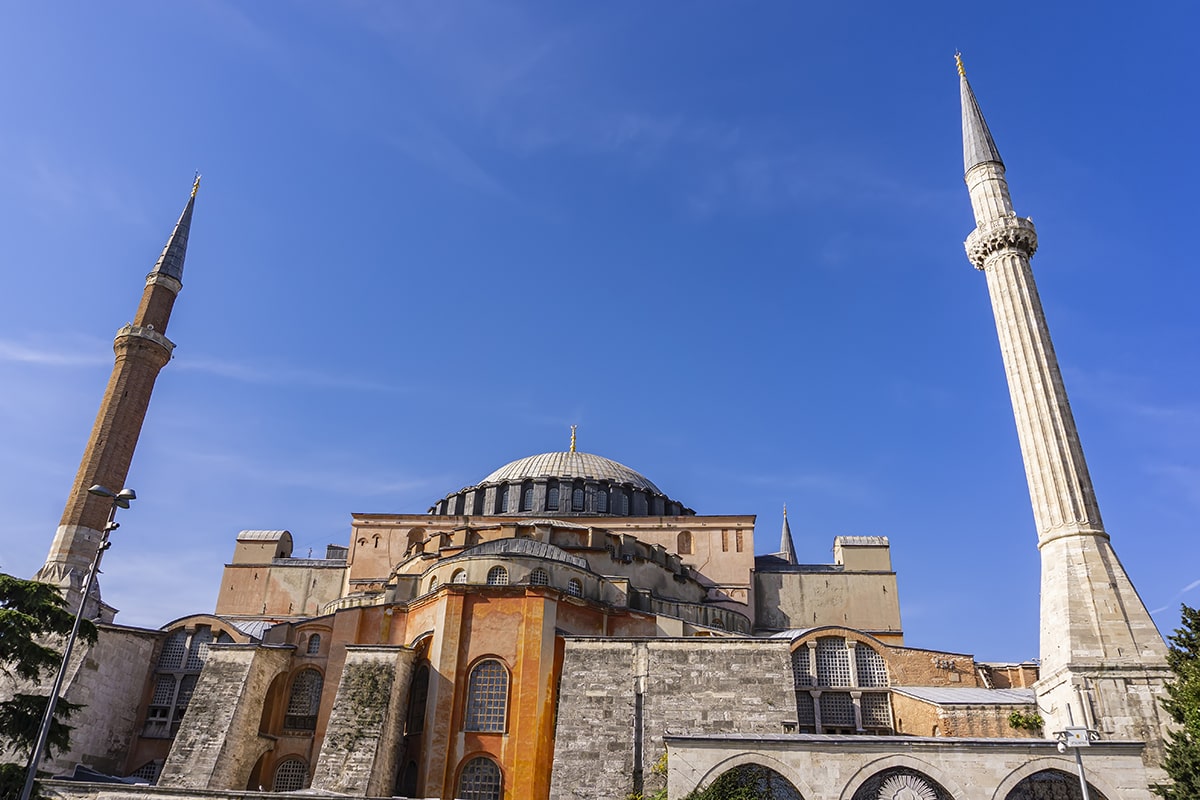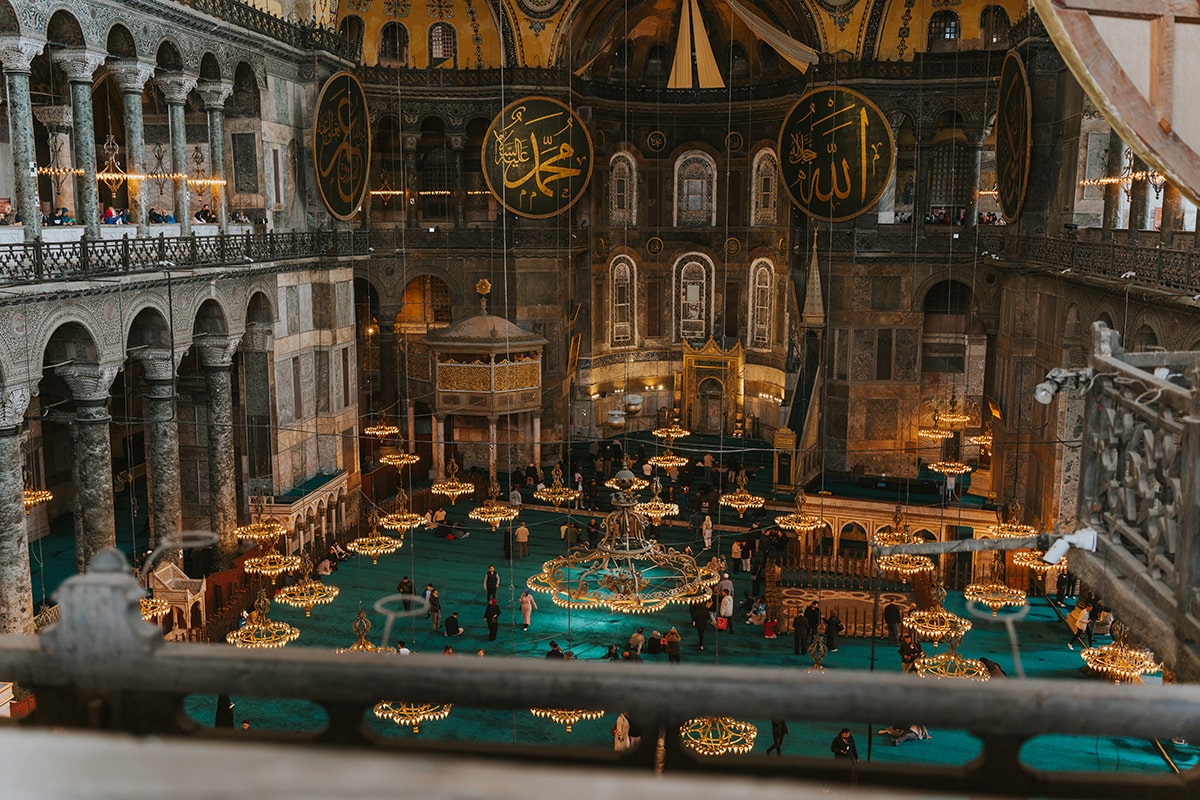
The Byzantine mosaics of Hagia Sophia are among the most magnificent examples of medieval art ever created. Glittering with gold and glass, these mosaics tell stories of faith, power, and divine majesty that once defined the spiritual heart of Constantinople. Although some have been partially covered over time, many remain visible offering a breathtaking glimpse into the artistry of the Byzantine Empire.
The Art of Light and Faith
Byzantine mosaics were crafted using small pieces of colored glass, gold leaf, and stone called tesserae. Artists placed them at slight angles to catch the light from Hagia Sophia’s dome windows, creating a shimmering, almost heavenly effect. The technique transformed sunlight into a visual symbol of divine presence, a spiritual experience as much as an artistic one.
The Deësis Mosaic (Upper Gallery)
Perhaps the most famous of all is the Deësis Mosaic, located in the southern gallery. It depicts Christ Pantocrator (Ruler of All) flanked by the Virgin Mary and John the Baptist, who plead for humanity’s salvation. The mosaic, dating from the 13th century, marks a turning point in Byzantine art toward more emotional, human, and expressive than earlier works.
Christ’s gaze, subtle shadows, and gentle gestures showcase a mastery of light and realism rarely seen in medieval art. Even in its partially damaged state, the Deësis remains one of Hagia Sophia’s most powerful and spiritually moving images.
The Imperial Door Mosaic
Found above the Imperial Door once reserved for Byzantine emperors, this 9th-century mosaic depicts Christ enthroned, offering a blessing and holding the Gospels. At his feet kneels Emperor Leo VI, symbolizing imperial humility before divine authority. The background shimmers with gold, emphasizing the heavenly court that emperors sought to emulate on earth.
Look closely, and you’ll notice Christ’s gesture of blessing and the delicate inscriptions, a reminder that power in Byzantium was always intertwined with faith.
The Apse Mosaic of the Virgin and Child
High above the main apse, visible from the central nave, stands one of the oldest surviving mosaics in Hagia Sophia: the Virgin Mary and Child. Installed around 867 AD, it marked the end of the Iconoclasm period, during which religious images were banned. The Virgin sits on a jeweled throne, holding the Christ Child on her lap, a symbol of divine wisdom and mercy.
The golden background reflects the light pouring from the dome windows, creating an ethereal glow that reinforces the sense of sacred space.
The Emperor and Empress Panels
In the upper galleries, you’ll find mosaics featuring Byzantine rulers alongside holy figures. The Emperor Constantine IX Monomachos and Empress Zoe mosaic (11th century) shows the imperial couple presenting gifts to Christ, while the Emperor Justinian and Constantine mosaic portrays the founders of Constantinople and Hagia Sophia offering the city and the church to the Virgin Mary.
These mosaics weren’t just decorative, they reinforced the emperor’s divine right to rule and his role as protector of the faith. Their vivid detail and expressive faces make them highlights for any visitor exploring the galleries.
The Hidden and Faded Mosaics
Many of Hagia Sophia’s mosaics were plastered over after its conversion into a mosque in 1453, as Islamic tradition discourages religious imagery inside places of worship. However, careful restorations beginning in the 20th century have revealed several of these treasures. Others remain covered, preserved beneath protective layers, waiting for future generations to uncover them.
How to See Them Best
- Visit early in the morning when sunlight enhances the gold reflections.
- Bring binoculars or use your phone zoom to observe the upper mosaics closely.
- Consider downloading an audio guide app that explains each mosaic’s symbolism and history.
- Spend extra time in the southern gallery, it holds most of the surviving masterpieces.
Final Thoughts
The Byzantine mosaics of Hagia Sophia are not just relics of the past, they are living reflections of a civilization that blended art, faith, and imperial power into something timeless. Every shimmer of gold and every expressive face tells part of a story that still resonates today, reminding visitors why Hagia Sophia remains one of the world’s greatest artistic and spiritual achievements.