The Hagia Sophia stands as one of the most extraordinary buildings in human history, symbolizing the meeting of civilizations, religions, and empires. Over the course of nearly 1,500 years, it has transformed from a Byzantine cathedral to an Ottoman mosque, later becoming a museum, and finally once again a functioning mosque. This ever-evolving identity makes Hagia Sophia not just a monument, but a living chronicle of world history.
The Byzantine Beginning (537 AD)
The story of Hagia Sophia begins in the heart of Constantinople, the capital of the Byzantine Empire. Emperor Justinian I commissioned the building after two earlier churches on the same site were destroyed. Designed by the mathematician Anthemius of Tralles and the physicist Isidore of Miletus, Hagia Sophia was completed in 537 AD, an architectural marvel far ahead of its time.
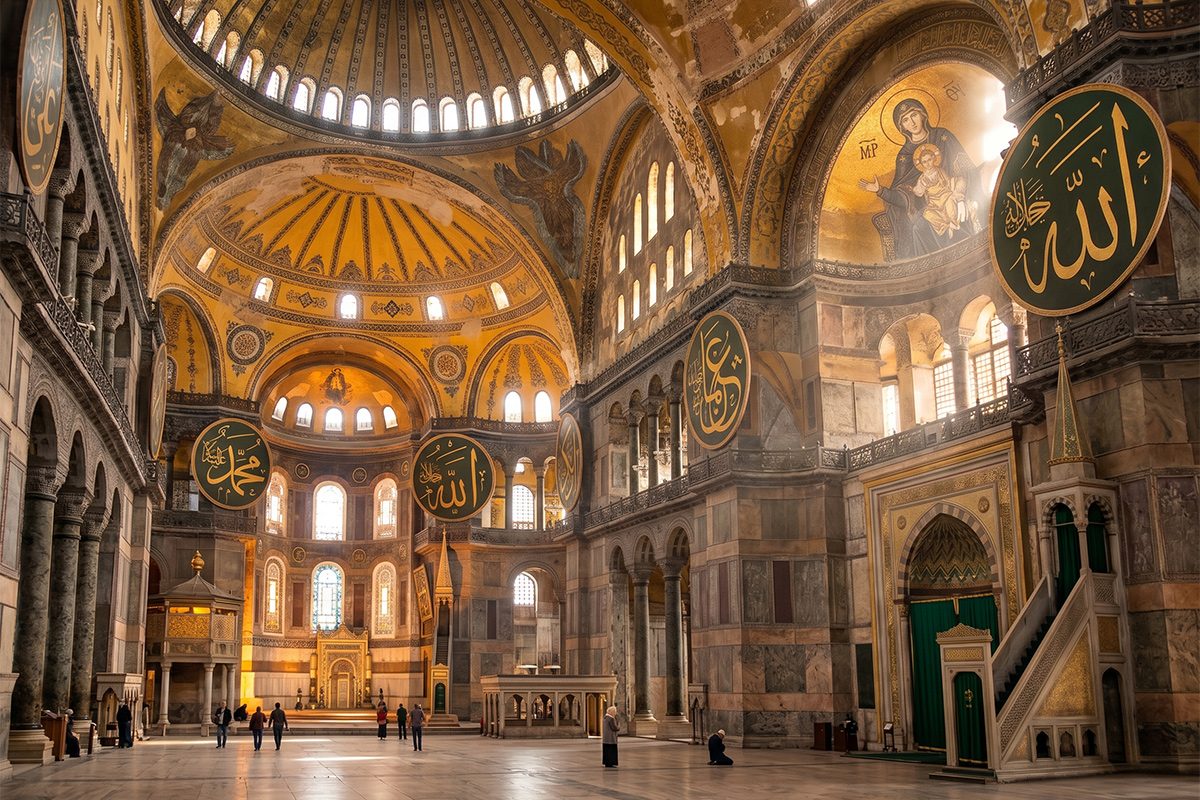
The massive dome, measuring 31 meters in diameter, seemed to float above the interior, inspiring awe and devotion. It served as the world’s largest cathedral for almost a thousand years, symbolizing the might of Christian Byzantium and its spiritual heart.
The Fall of Constantinople and the Ottoman Transformation (1453)
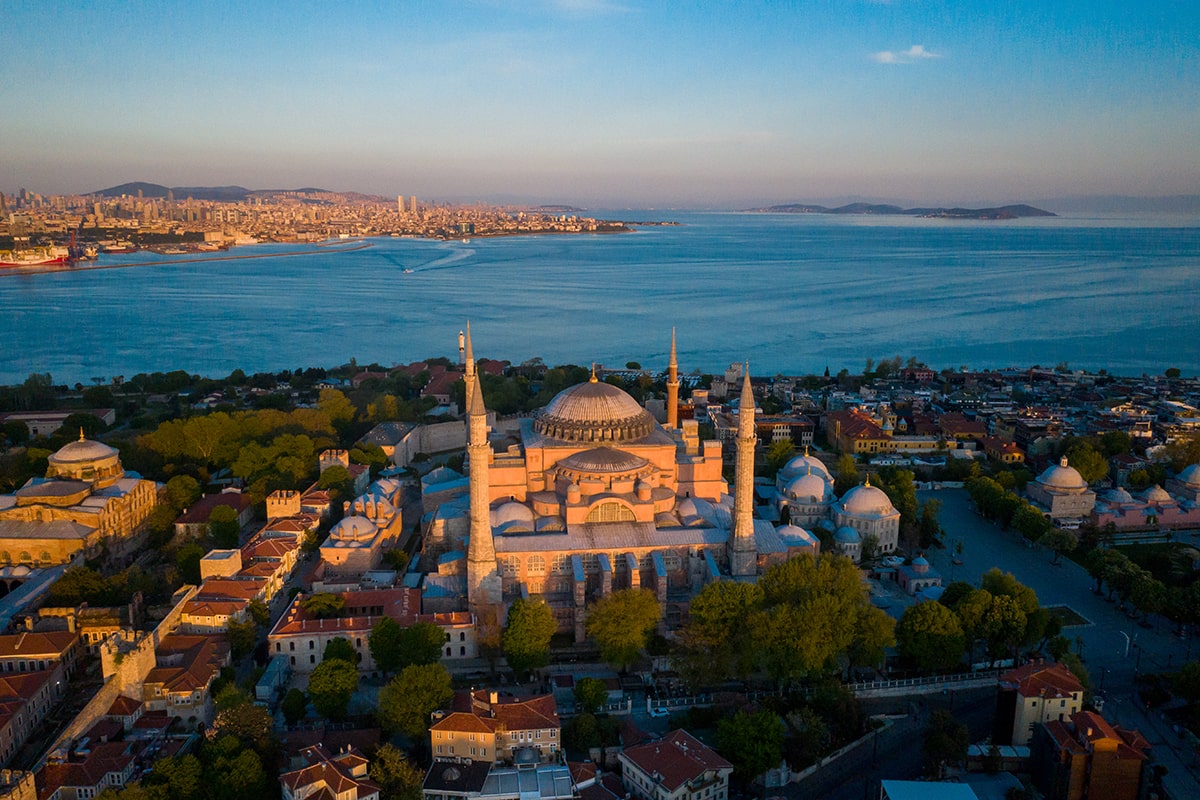
In 1453, after the Ottoman conquest of Constantinople led by Sultan Mehmed II (known as Mehmed the Conqueror), Hagia Sophia entered a new chapter. The Sultan, struck by its grandeur, immediately converted it into a mosque, marking the rise of Istanbul as the capital of the Ottoman Empire.
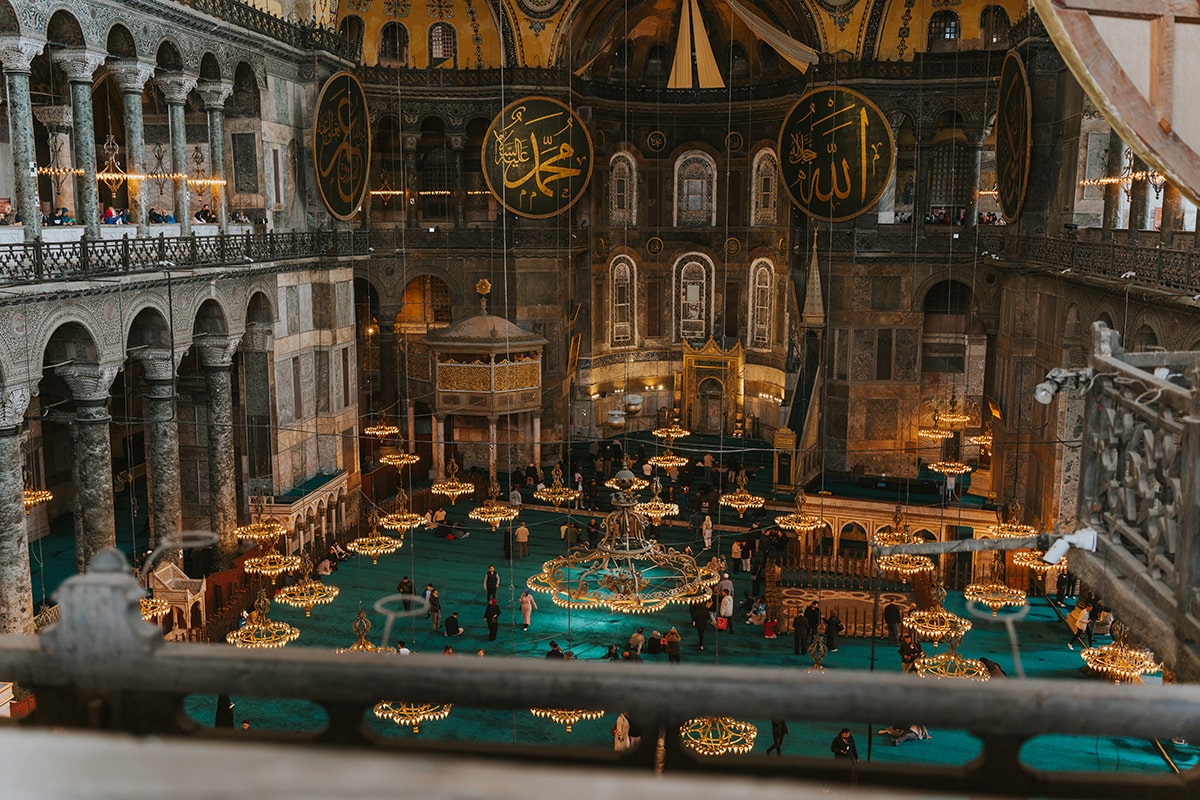
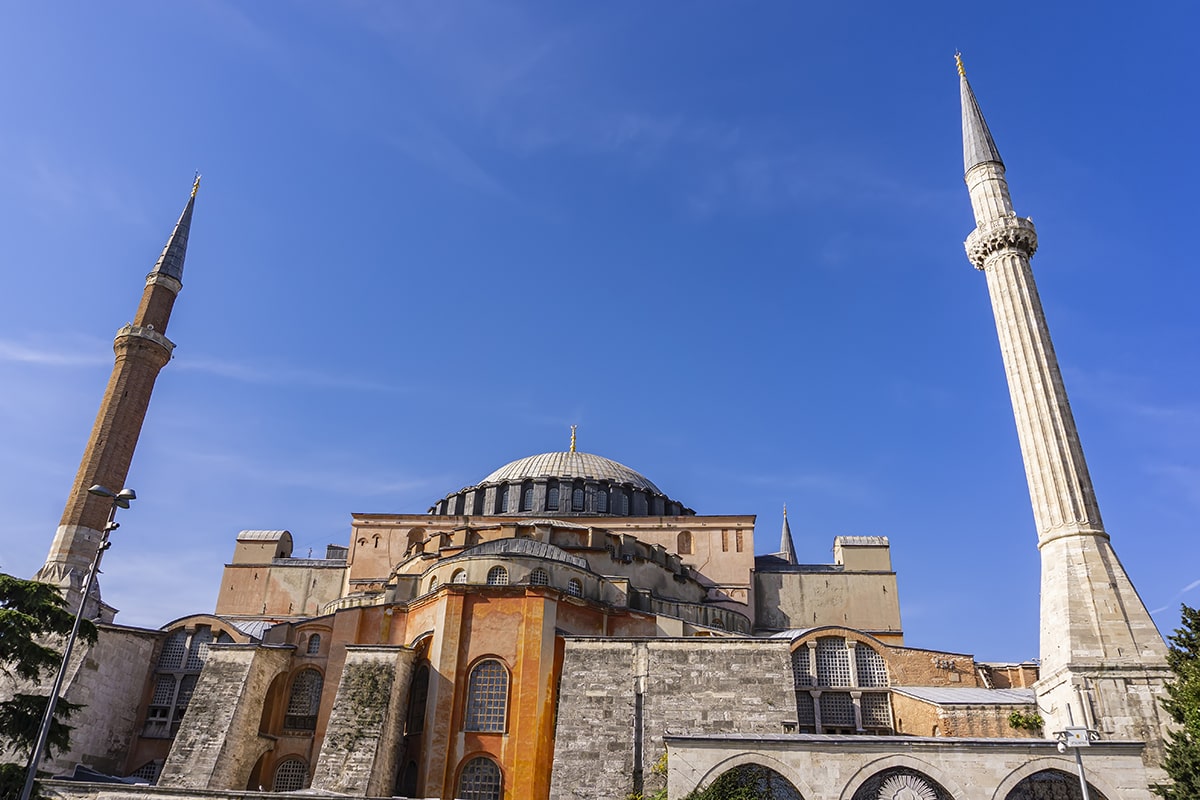
Minarets were added to the corners of the structure, the Christian mosaics were carefully covered but not destroyed, and the Islamic calligraphy of Allah and the Prophet Muhammad was installed. The Ottomans preserved the building meticulously, adding architectural reinforcements designed by the great architect Mimar Sinan in the 16th century.
For nearly 500 years, Hagia Sophia served as one of the empire’s most important mosques, hosting sultans and scholars alike. Its transformation became a lasting symbol of Istanbul’s new identity bridging East and West, Islam and Christianity, tradition and innovation.
The Republic of Turkey and the Museum Era (1935)
Following the fall of the Ottoman Empire and the establishment of the Republic of Turkey, Hagia Sophia entered yet another phase. In 1935, under the direction of Mustafa Kemal Atatürk and the new secular government, the building was converted into a museum. This decision aimed to preserve its dual heritage, celebrating both its Christian mosaics and Islamic art.
The museum years allowed millions from all over the world to admire the coexistence of two great faiths under one roof. Restorations uncovered long-hidden Byzantine mosaics, while preserving Ottoman elements such as the minarets and mihrab. It became a global symbol of cultural harmony and shared history.
Reversion to a Mosque (2020–Present)
In 2020, Hagia Sophia’s status changed once again when a court ruling annulled its museum designation, allowing it to resume its role as a mosque. Today, it functions as an active place of worship while remaining open to visitors of all faiths. Entry is free, though respectful dress and conduct are expected.
Despite the political and cultural debates surrounding each transformation, Hagia Sophia continues to embody unity through diversity, a physical reminder that history is not erased but layered over time.
A Monument Beyond Time
Whether seen as a church, mosque, or museum, Hagia Sophia’s essence lies in its ability to transcend labels. Its soaring dome, ancient mosaics, and layers of meaning tell a story not just of empires, but of humanity’s ongoing quest for beauty, faith, and understanding.
Visiting Hagia Sophia today means walking through centuries of transformation from the golden age of Byzantium to the grandeur of the Ottomans and the modern era of the Turkish Republic. Each brick and mosaic whispers a part of that journey, making it one of the world’s most powerful symbols of shared cultural heritage.